The Remote Health Coaching Job Market in May 2026
Remote health coaching jobs are growing fast — and right now, there are real opportunities across the U.S. for certified coaches at every level.
Here’s a quick snapshot of what the market looks like today:
| Category | Current Numbers |
|---|---|
| Total remote health & wellness coach jobs (U.S.) | 199 listings |
| Fully remote positions | 91 |
| Full-time roles | 173 |
| Mid-senior level positions | 121 |
| Typical salary range | $20–$56/hr or $55K–$117K/year |
The most common roles include:
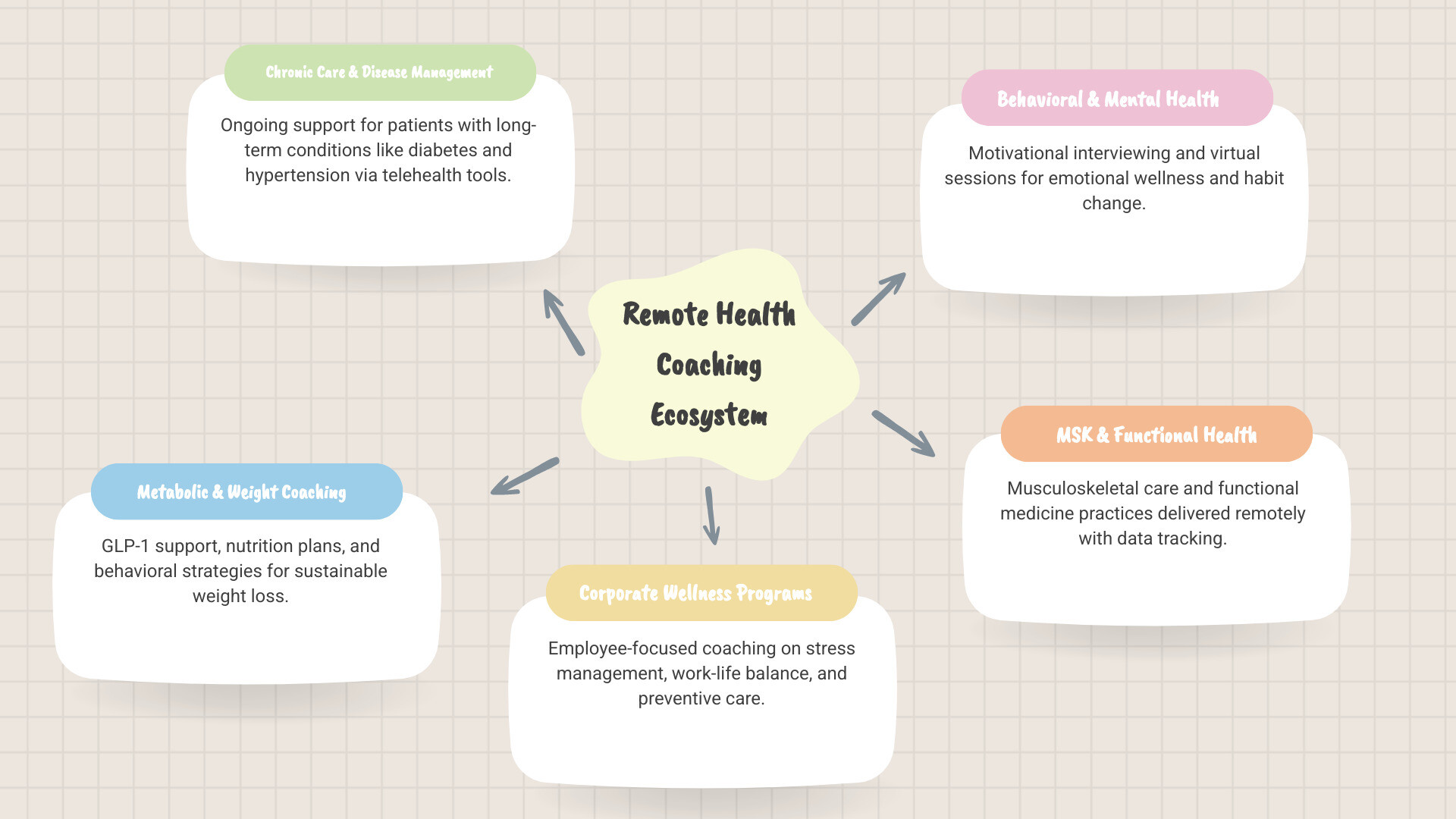
- Chronic care and disease management coaches
- Corporate wellness coaches
- Metabolic health and weight management coaches
- Behavioral health coaches
- Virtual musculoskeletal care coaches
Most positions require a recognized certification (such as NBC-HWC or ICF), at least 1–3 years of experience, and comfort with telehealth tools like Zoom and CRM platforms.
Whether you want full-time employment with benefits or a flexible contract role, the remote coaching landscape has both — and demand keeps climbing as more healthcare companies shift to virtual-first care models.
The shift toward digital health isn’t slowing down. Corporate wellness programs, chronic disease platforms, and AI-driven coaching startups are all actively hiring. If you’ve been thinking about making a move into remote coaching — or leveling up your current coaching career — this guide breaks down exactly where to look and how to land the right role.
Key remote health coaching jobs vocabulary:
Common Types of Remote Health Coaching Jobs Available Today
The world of health coaching has evolved far beyond the local gym. In May 2026, the diversity of roles available to those seeking remote health coaching jobs is staggering. Whether your passion lies in helping someone manage a lifelong condition or helping a corporate team find their zen, there is likely a virtual seat waiting for you.
Chronic care management is currently one of the largest sectors. These roles involve working with individuals to manage conditions like diabetes, hypertension, or heart disease. Coaches in this space act as the vital link between a patient’s doctor and their daily life, helping them implement the lifestyle changes necessary to stay healthy.
Behavioral health is another booming area. These positions often focus on “sub-clinical” cases—people dealing with high stress, burnout, or work-life balance issues who don’t necessarily need a therapist but desperately need a coach.
If you are just starting out, you might wonder if this path is right for you. We recommend checking out our guide on So You Want to Be a Health Coach: Everything You Need to Know to get a better sense of the landscape. Additionally, understanding Why Your Next Coach Should Be Online and Objective can help you articulate the value of virtual coaching to potential employers.
Specialized Roles in Metabolic and Musculoskeletal Care
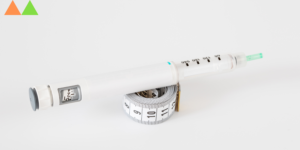
As we move further into 2026, we are seeing a massive surge in specialized remote health coaching jobs focused on metabolic health. With the rise of GLP-1 medications and peptides for weight management, coaches are increasingly needed to provide the “holistic” side of the equation—teaching patients about nutrition, fasting, and mindset while they navigate medical treatments.
Musculoskeletal (MSK) care is also going virtual. In these roles, health coaches often collaborate with physical therapists and physicians to help patients recover from injuries or manage chronic pain through movement and behavioral changes. These roles are perfect for those who enjoy a clinical environment but want the flexibility of working from home.
Corporate and Employee Wellness Positions
Many large companies now realize that a healthy employee is a productive one. Corporate wellness coaches work within employee assistance programs (EAPs) to provide preventative care. This can include everything from hosting group webinars on stress management to one-on-one sessions focused on habit formation.
A unique trend in this sector is the use of AI-matched coaching. Platforms now use algorithms to pair employees with the coach best suited to their personality and goals. Furthermore, there is a high demand for bilingual coaches—specifically those fluent in Spanish, Portuguese, or French—to support global workforces.
Qualifications and Essential Skills for Success
To land a high-quality remote role, you need more than just a passion for wellness. Employers in 2026 are looking for “credentialed” professionals. The “gold standard” is the National Board Certified Health & Wellness Coach (NBC-HWC) credential, but many organizations also value International Coaching Federation (ICF) certifications.
Beyond certifications, clinical licenses can significantly boost your earning potential. We often see roles that prefer or require a Registered Dietitian (RD) license or a Registered Nurse (RN) background.
Success in these roles often comes down to your ability to drive results. Employers love to see experience with Crush Your Goals with Personalized Health Coaching Plans and Progress Logs, as it shows you understand how to use data to keep clients on track.

Technical Proficiency and Remote Tools
Working remotely means your “office” is digital. You’ll need to be proficient in:
- Telehealth Platforms: Zoom, Google Meet, or proprietary company apps.
- CRM and Documentation: Tools like Zendesk, Salesforce, or specialized electronic health records (EHR) to track progress notes within 24 hours of a session.
- HIPAA Compliance: Understanding how to keep client data secure in a home office environment is non-negotiable.
- AI-Powered Metrics: Many modern platforms use AI to provide insights into client progress; you’ll need to know how to interpret this data to provide “metrics-driven” coaching.
Essential Soft Skills for Virtual Engagement
Without the benefit of being in the same room, your communication skills have to be top-tier.
- Motivational Interviewing: This is the most requested skill in job descriptions. It’s about asking the right questions to help clients find their own internal motivation.
- Active Listening: Picking up on verbal cues that you might otherwise miss without body language.
- Empathy and Energy: Remote coaching can be draining; maintaining a high level of engagement through a screen is a skill in itself.
- Bilingual Proficiency: As mentioned, being able to coach in multiple languages is a massive competitive advantage in the current market.
Salary Ranges and Compensation Structures
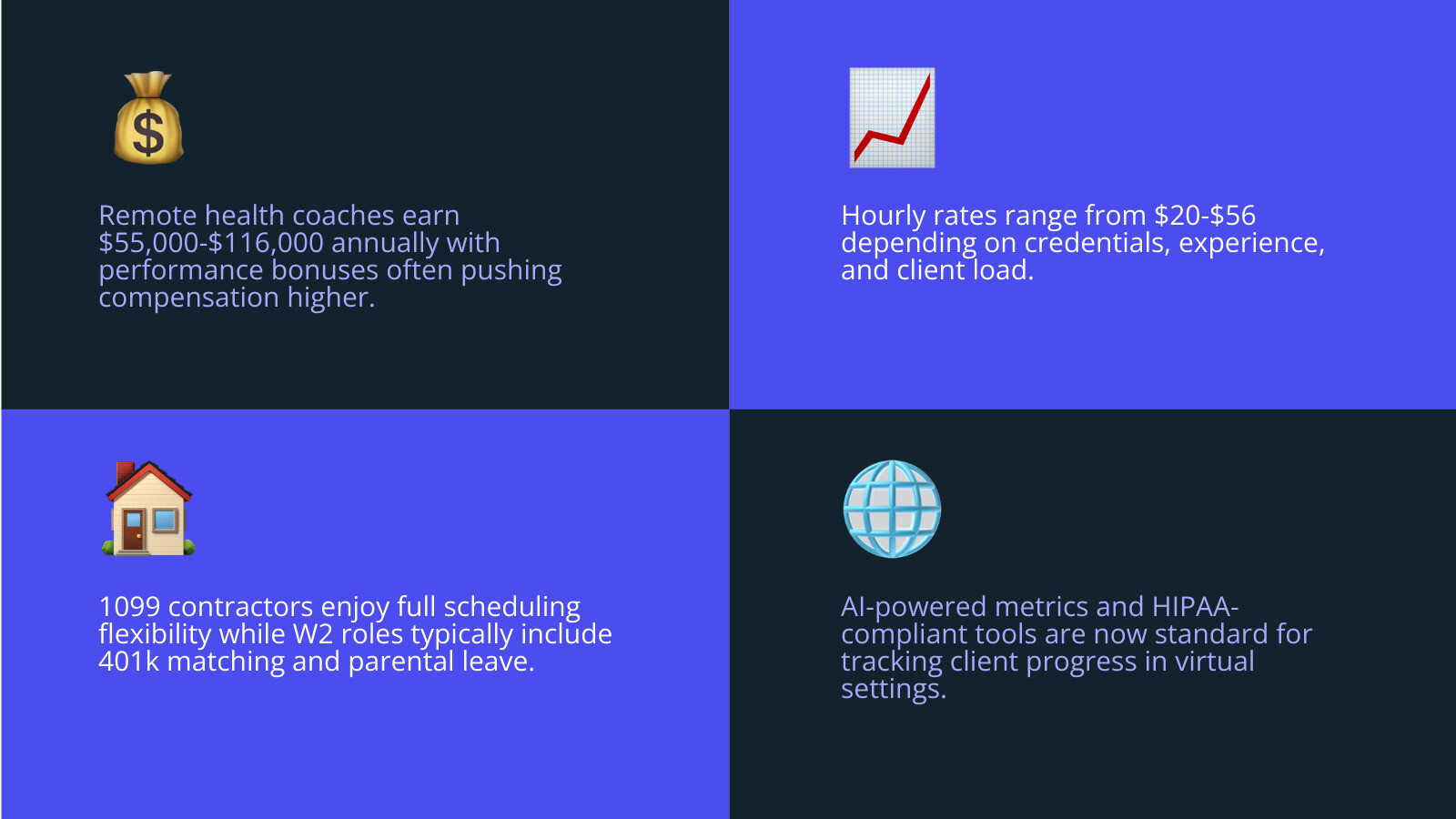
One of the biggest questions we get is: “Can I actually make a living doing this?” The answer is a resounding yes. Compensation for remote health coaching jobs has become much more competitive as the industry has matured.
Benefits and Work-Life Balance
The “perks” of remote coaching often go beyond the paycheck. Many W2 roles offer:
- Flexible Scheduling: The ability to set your own hours or work “non-traditional” shifts (evenings/weekends).
- Professional Development: Stipends for continuing education and maintaining your certifications.
- Comprehensive Benefits: 401k matching, health insurance, and increasingly, generous parental leave (some companies now offer up to 16 weeks of 100% paid leave).
- Remote-First Culture: This means the company is built for remote work, so you won’t feel like an outsider compared to “in-office” staff.
Top Companies and Platforms Hiring for Remote Health Coaching Jobs
If you’re ready to start your search, there are several “hubs” where these jobs live. Platforms like Virtual Vocations and Indeed are excellent starting points for finding Remote Health & Wellness Coach positions.
National and Global Hiring Platforms
Telehealth giants and startups are the primary employers. Companies specializing in chronic condition management (like diabetes or musculoskeletal care) are almost always hiring. You can often find a high volume of listings on specialized boards like the American College of Lifestyle Medicine, which frequently lists roles for coaches who understand the pillars of lifestyle medicine.
For those looking for maximum flexibility, check out Flexible Remote Wellness Health Coach Jobs – Indeed. These listings often include 1099 contract roles where you can pick up as few as 15 hours a week.
Local Opportunities in Maryland and DC
For our neighbors in Mount Airy, Frederick, and Carroll County, there are unique regional opportunities. Even “remote” jobs sometimes prefer candidates in certain time zones or near their headquarters for occasional team meetups.
We see a significant number of listings in the Baltimore-Washington corridor:
- 164 Health Coach jobs in Maryland – LinkedIn
- 325 Health Coach jobs in Washington DC-Baltimore Area – LinkedIn
Local healthcare networks in Maryland are increasingly adopting “hybrid” models, where you might work from home four days a week and visit a clinic in Frederick or Baltimore once a week.
How to Find and Apply for Remote Health Coaching Jobs Effectively
Landing a remote role requires a strategic approach. Don’t just “spray and pray” with your resume.
- Optimize Your Resume: Use keywords like “Motivational Interviewing,” “SMART goals,” and “HIPAA compliance.”
- Define Your Philosophy: Many applications now ask for a “coaching philosophy” note. Be ready to explain how you empower clients to make lasting changes.
- Highlight Data Skills: If you have experience with Get a Coach Who Actually Tracks Your Progress, make sure that is front and center. Employers want to know you can prove your impact.
- Niche Down: Are you an expert in The Complete Guide to Finding Online Personal Trainers? Or perhaps you specialize in postpartum wellness? Highlighting a niche makes you more memorable.
Navigating the Remote vs. In-Person Landscape
While the lure of the home office is strong, don’t discount the value of local connections. In places like Mount Airy and Frederick, many coaches find success by blending their remote work with local networking. Understanding Everything You Need to Know About In-Person Fitness Coaching can help you decide if a “hybrid” role might actually offer you the best of both worlds—the freedom of home and the community of a local clinic or gym.
Frequently Asked Questions about Remote Health Coaching
What are the most common certifications required for remote roles?
The most frequently cited certifications are the NBC-HWC (National Board for Health & Wellness Coaching) and the ICF (International Coaching Federation). Many clinical roles also require an RD (Registered Dietitian) or RN (Registered Nurse) license.
Can I work as a remote health coach part-time?
Absolutely. Many companies offer contract (1099) positions with a minimum requirement of 15–20 hours per week. This is a great way to build your experience while maintaining other commitments.
How do remote health coaching salaries compare to in-person roles?
In 2026, they are very comparable. While some entry-level remote roles start around $20–$25/hour, experienced coaches in specialized fields like metabolic health or corporate wellness can earn upwards of $100,000 per year, which often exceeds what a traditional gym-based coach might earn.
Conclusion
The career outlook for health coaching in May 2026 is brighter than ever. As the healthcare industry continues to embrace virtual care, the demand for skilled, empathetic, and tech-savvy coaches will only grow. Whether you are looking for a full-time role with a national telehealth leader or a flexible local opportunity in Maryland, the tools and platforms are at your fingertips.
At Primedy Health, we believe in the power of professional guidance to transform lives. If you’re ready to take the next step—either as a coach or as someone looking for support—we invite you to Start your journey with professional health coaching and see how our structured, sustainable approach can help you reach your goals.