Health and Wellness Coaching Jobs: What You Need to Know Before You Start
Health and wellness coaching jobs are one of the fastest-growing career paths in the wellness industry right now — and for good reason.
Here’s a quick snapshot of what these roles look like in 2026:
| Factor | What to Expect |
|---|---|
| Job titles | Health Coach, Wellness Coach, Wellness Coordinator, Lifestyle Coach |
| Work settings | Corporate, clinical, remote, private practice, fitness centers |
| Salary range | ~$40,000 to $140,000+ depending on role and location |
| Top certifications | NBHWC (NBC-HWC), Wellcoaches, ACLM, ACSM |
| Work arrangements | Full-time, part-time, remote, hybrid, freelance |
| Experience needed | Entry-level to senior; many roles require certification, not a medical degree |
The demand is real. California alone lists over 4,000 wellness coaching jobs on LinkedIn. In Greater Houston, 120 wellness coach roles are open right now — spanning fitness centers, healthcare providers, schools, and community organizations.
But here’s the thing: not all health coaching jobs look the same.
Some coaches work one-on-one with clients in private practice. Others are embedded in hospital systems or corporate wellness programs. Some work entirely from home via telehealth. The range of roles, salaries, and required credentials can feel overwhelming if you don’t know where to start.
This guide breaks it all down — from what health coaches actually do day-to-day, to what certifications employers are looking for, to where the jobs are and how to get hired.
What is a Health and Wellness Coach?
At its core, a health and wellness coach is a behavior change expert. We aren’t just here to tell people to “eat more greens” or “hit the gym.” Instead, we act as partners and advocates, helping individuals bridge the gap between knowing what they should do and actually doing it.
In 2026, the primary toolkit for health and wellness coaching jobs includes:
- Motivational Interviewing: A clinical communication style that helps clients find their own internal motivation to change.
- SMART Goals: Setting Specific, Measurable, Achievable, Relevant, and Time-bound objectives to ensure progress isn’t just a dream, but a plan.
- Patient Advocacy: Helping clients navigate complex healthcare systems and advocating for their needs within a care team.
- Chronic Condition Management: Supporting individuals with diabetes, hypertension, or heart disease to manage their symptoms through lifestyle adjustments.
Many coaches also work within “population health.” This involves using data and patient registries to identify people who might be falling through the cracks and reaching out to offer support. It’s about care coordination—ensuring that a doctor’s recommendation actually turns into a sustainable daily habit.
If you’re interested in how these theories turn into practice, you can learn more about health coaching services that focus on these evidence-based techniques. For those just starting their journey, we often recommend beginning with a professional consultation to understand how coaching integrates with broader fitness and medical goals.
Navigating the Landscape of Health and Wellness Coaching Jobs
The “wellness industry” is a massive umbrella. Depending on your interests, you could find yourself in a high-rise corporate office, a local primary care clinic, or running your own business from a laptop.

Currently, the market for health and wellness coaching jobs is divided into several key sectors:
- Corporate Wellness: Large companies hire coaches to reduce insurance premiums and improve employee productivity. You might manage “Wellness Works” programs, lead stress-management workshops, or conduct biometric screenings.
- Clinical Support: Working alongside doctors and nurses in hospital systems to provide “Lifestyle Medicine.”
- Insurance Providers: Many insurance companies now employ coaches to help members manage chronic conditions, which lowers long-term healthcare costs.
- Private Practice: Striking out on your own to offer specialized coaching for specific niches, like postpartum wellness or Parkinson’s fitness.
The sheer volume of opportunity is staggering. For instance, there are currently 4,000+ Wellness Coaching Jobs in California alone, ranging from behavioral health coaches to director-level wellness roles.
Remote vs. On-Site Health and Wellness Coaching Jobs
One of the best perks of this career in 2026 is the flexibility. While many traditional roles remain on-site — especially in fitness centers and clinics — the rise of digital health has exploded the number of work-from-home opportunities.
Platforms like FlexJobs highlight a variety of 100% remote, hybrid, and freelance schedules. In these roles, you might use video conferencing and apps to provide Virtual 1 On 1 Training or monitor a client’s progress through wearable tech data.
However, it is worth noting that some local markets still lean heavily toward in-person interaction. In Greater Houston, for example, 115 out of 120 listed wellness coach jobs are on-site, showing that physical presence is still highly valued in many community-based and clinical settings.
Specialized Health and Wellness Coaching Jobs in Clinical Settings
If you have a background in healthcare, you might find your niche in clinical coaching. Many hospital systems are now blending the role of a coach with other certifications. It isn’t uncommon to see job listings for a “Health Coach” that also require a Medical Assistant (MA) or Licensed Practical Nurse (LPN) designation.
In these settings, coaches perform “pre-visit planning,” review patient registries to close care gaps, and use motivational interviewing to support self-management of diseases. A great example of this specialized public service is the resiliency and wellness coach in Frederick, MD, a role designed to support the mental and physical health of first responders.
Essential Qualifications and Certifications
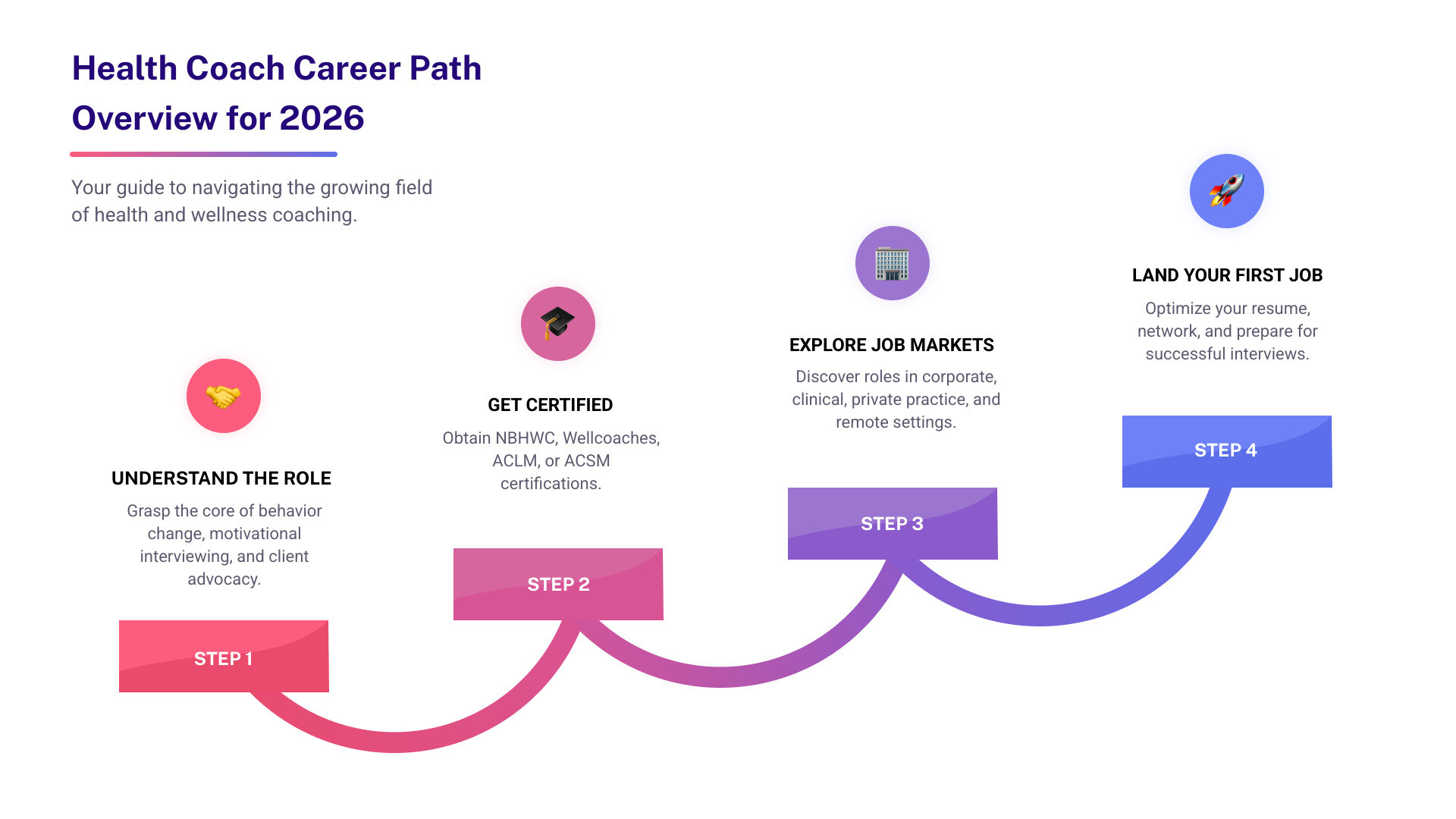
You can’t just wake up and call yourself a health coach — at least not if you want the best health and wellness coaching jobs. Employers in 2026 look for specific credentials that prove you understand the science of behavior change.
- NBHWC (National Board for Health & Wellness Coaching): This is the gold standard. Becoming a National Board Certified Health & Wellness Coach (NBC-HWC) opens the most doors in clinical and corporate settings.
- Wellcoaches: Many organizations, including large healthcare networks, specifically list Wellcoaches certification as a preferred or required qualification.
- ACLM & ACSM: The American College of Lifestyle Medicine and the American College of Sports Medicine also offer respected paths for those looking to blend coaching with clinical or fitness expertise.
For those in our local area, you can find excellent Certified Health Coach training at Carroll Community College, which provides a solid foundation for the national board exam.
Beyond coaching-specific certificates, you should also maintain:
- Current CPR/AED certification.
- Clean background clearances (standard for clinical and school-based roles).
- Experience with Customized Virtual Programming for remote roles.
Salary Expectations and Market Demand in 2026
Money matters. The good news is that as the value of preventative health becomes clearer to the world, salaries for health and wellness coaching jobs are rising.
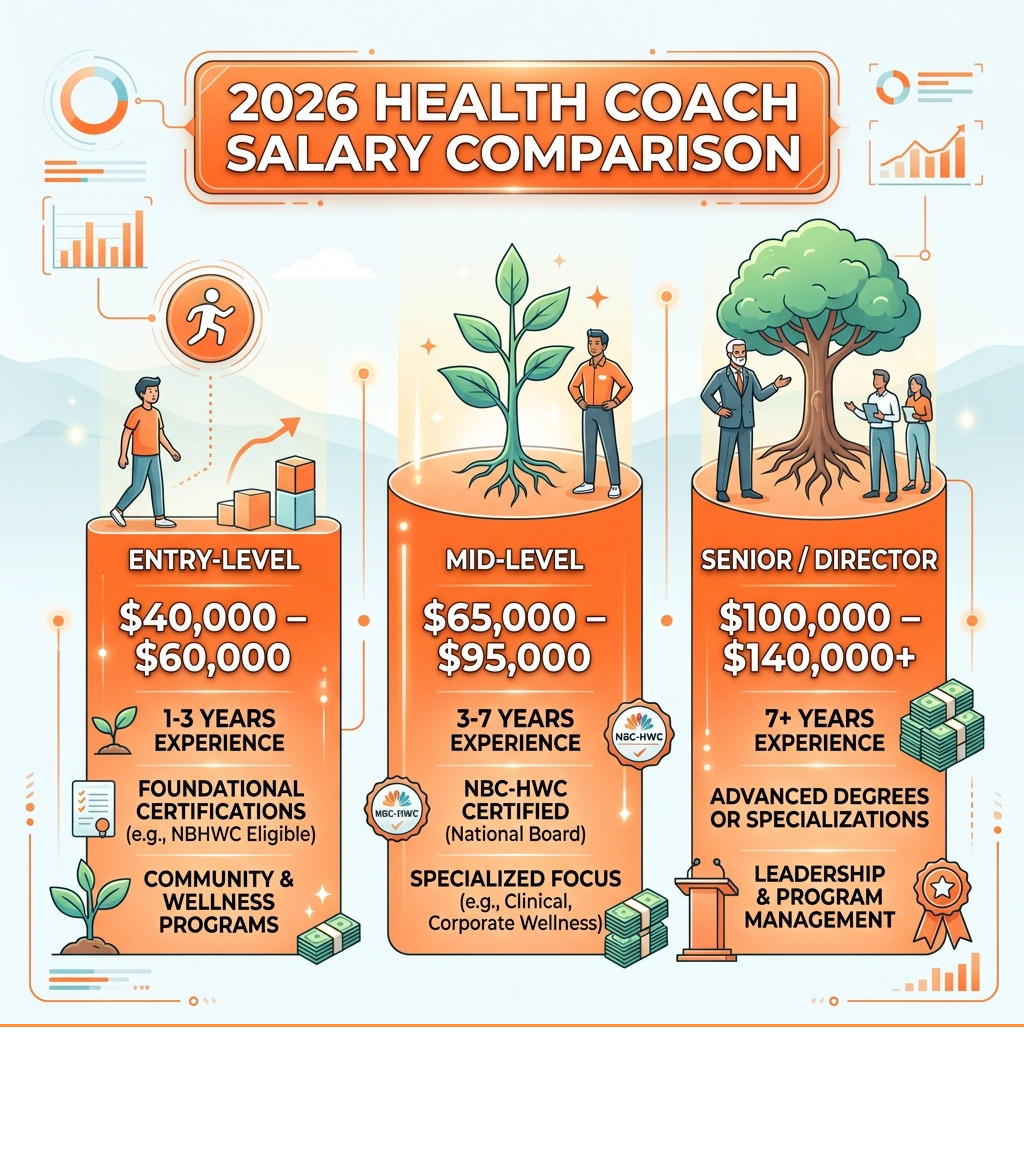
| Experience Level | Typical Salary Range |
|---|---|
| Entry-Level | $40,000 – $60,000 |
| Mid-Level | $65,000 – $95,000 |
| Senior / Director | $100,000 – $140,000+ |
Geographic location plays a huge role in what you’ll earn. In the Maryland and Baltimore area, the market is particularly active. Currently, there are 159 Health Coach jobs in Maryland available on LinkedIn, with a significant concentration of Health Coach jobs in Baltimore.
Other hubs like the Health Coach jobs in Dallas-Fort Worth area show similar trends, with salaries often scaling based on the cost of living and the complexity of the role (e.g., bilingual coaches or those with RN backgrounds often command higher pay).
How to Land Your First Health and Wellness Coaching Job
Ready to jump in? Landing your first role requires more than just a certificate; it requires a strategy.

- Optimize Your Resume: Use keywords like “motivational interviewing,” “behavior change,” and “SMART goals.” Many employers use automated systems to filter for these terms.
- Use Specialized Job Boards: Don’t just stick to the big sites. Check the NBHWC Career Center or the Job Board | Wellcoaches for roles that specifically value your training.
- Showcase Your Work: If you’re applying for a fitness-focused role, be prepared to demonstrate how you design Pre Designed Programs or how you track objective progress for your clients.
- Network Locally: In places like Mount Airy and Frederick, MD, community connections are everything. Attend local health fairs and connect with local wellness providers.
Frequently Asked Questions about Health Coaching Careers
What is the typical salary for health and wellness coaching jobs?
As of 2026, salaries range from $40,000 for entry-level community roles to over $140,000 for senior directors in corporate wellness or specialized clinical consultants. Your geographic location and the “blended” nature of your role (e.g., if you are also an LPN or Registered Dietitian) significantly impact your earning potential.
Can I find remote health and wellness coaching jobs?
Absolutely. Digital health platforms and telehealth providers are some of the largest employers of coaches today. Sites like FlexJobs are excellent resources for finding 100% remote or hybrid arrangements.
Do I need a medical degree for health and wellness coaching jobs?
No. While some clinical roles require you to be a Medical Assistant or RN, the majority of wellness coaching positions require a high school diploma plus a recognized certification (like the NBC-HWC). Coaches focus on behavior change, not medical diagnosis or prescribing treatment.
Conclusion
The career path for health and wellness coaching jobs is more than just a way to earn a living—it’s a way to make a lasting impact on the health of your community. Whether you’re working in a clinical setting in Frederick, MD, or coaching remotely for a global tech firm, you are the catalyst for sustainable change.
At Primedy Health, we believe in the power of structured, sustainable programs. We’ve seen how objective progress tracking and professional support can change lives in Mount Airy and throughout Carroll County. If you’re ready to see what professional coaching can do for you—or if you’re looking to see a successful coaching model in action—we invite you to start your journey with professional health coaching today. The future of wellness is coach-led, and there’s never been a better time to be part of it.