
What Is Sustainable Fitness — and Why Does It Matter?
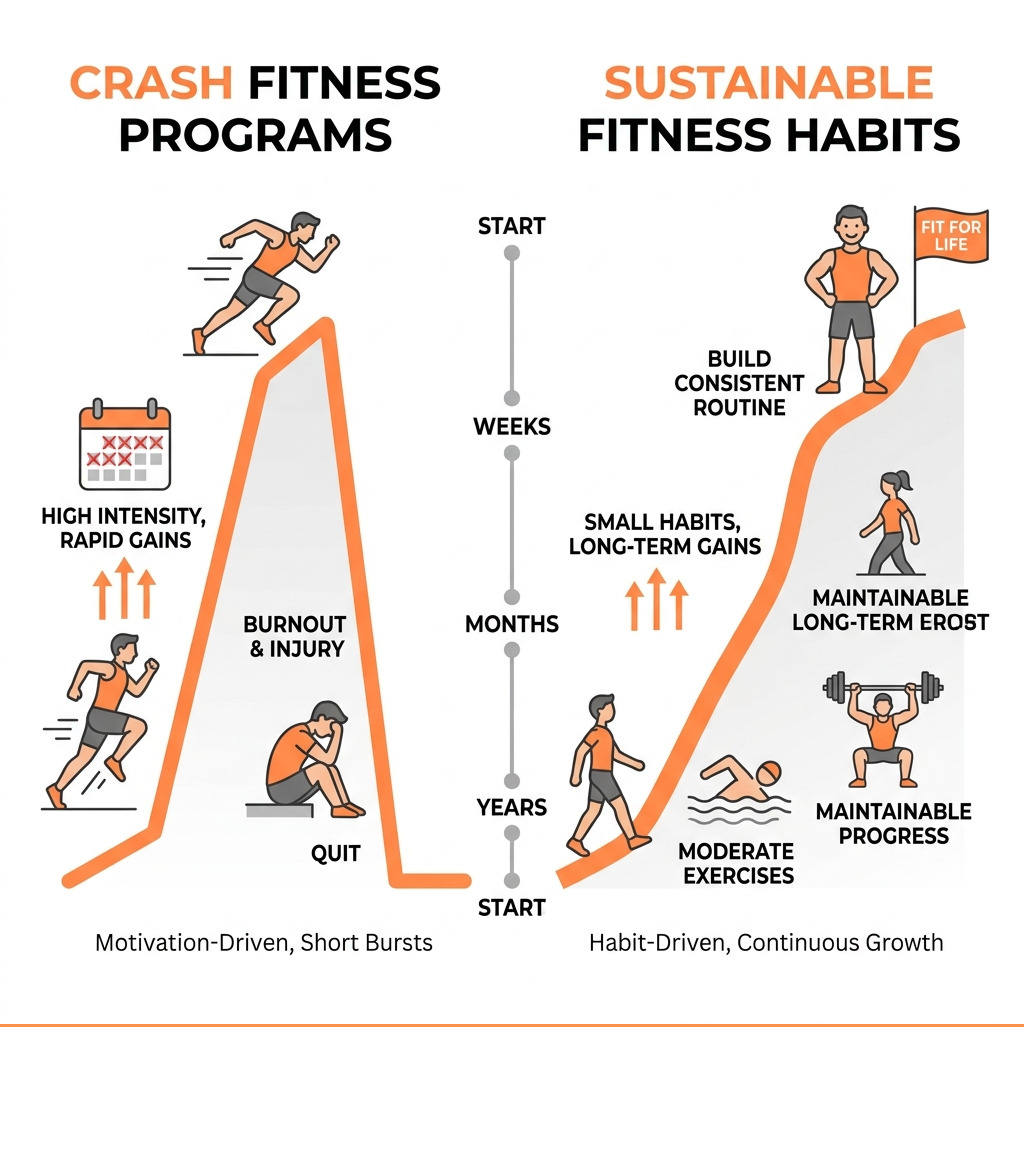
Sustainable fitness is an approach to exercise that prioritizes consistency, balance, and long-term progress over short bursts of intense effort that burn you out.
Here’s the quick version:
- What it is: A fitness routine you can actually maintain for years, not just weeks
- What it isn’t: A crash program, a 30-day challenge, or an all-or-nothing overhaul
- How it works: Small, repeatable habits built into your daily life — no white-knuckling required
- Why it matters: Consistent, moderate effort over time produces better results than intense effort that leads to injury, burnout, or quitting
Most fitness routines start the same way. High motivation, new gear, a packed schedule of workouts. Then life happens — a late meeting, a sick kid, one missed session — and suddenly the whole thing falls apart. Sound familiar?
That cycle isn’t a willpower problem. It’s a design problem.
Research on fitness behavior consistently shows that motivation fluctuates. It can be a 7 out of 10 in the morning and drop to a 2 by evening. Routines built on motivation alone are fragile by design. Sustainable fitness solves this by replacing motivation-dependence with structure, habit, and identity.
The goal isn’t to work out harder. It’s to build a routine so well-fitted to your life that skipping it feels stranger than doing it.
The Core Principles of Sustainable Fitness
At its heart, sustainable fitness is built on the philosophy of “consistency over intensity.” While the fitness industry often sells us on the idea of “no pain, no gain,” the reality is that the most successful athletes are those who stay in the game the longest.
We focus on Foundations because a house built on sand cannot stand. In fitness terms, those foundations are realistic goals and habit formation. Instead of aiming to lose 20 pounds in a month, a sustainable goal might be to perform three strength training sessions per week for a year.
The core principles include:
- Longevity Over Short-Term Gains: Asking yourself, “Can I see myself doing this five years from now?”
- Gradual Progression: Increasing intensity only when your body and schedule have fully adapted to the current load.
- Flexibility: Understanding that a 15-minute walk is better than a missed 60-minute gym session.
Why Most Sustainable Fitness Plans Fail
If the benefits are so clear, why do we see so many abandoned gym memberships by March? Usually, it’s due to the “all-or-nothing” mindset. This psychological trap convinces us that if we can’t do a “perfect” workout, we shouldn’t do one at all.
Common pitfalls include:
- Unrealistic Expectations: Trying to go from sedentary to six days a week of high-intensity training.
- Lack of Structure: Walking into a gym without a plan, leading to “analysis paralysis” and eventual boredom.
- Burnout and Friction: Choosing exercises you genuinely hate or a gym that is a 45-minute drive away.
- Ignoring Recovery: Overtraining is a primary cause of injury, which is the ultimate “sustainability killer.”
Integrating Sustainable Fitness into Daily Life
To make sustainable fitness stick, it must move from being an “extra” to being a non-negotiable part of your day, like brushing your teeth. We recommend treating your workouts as non-negotiable appointments in your calendar.
Practical integration strategies include:
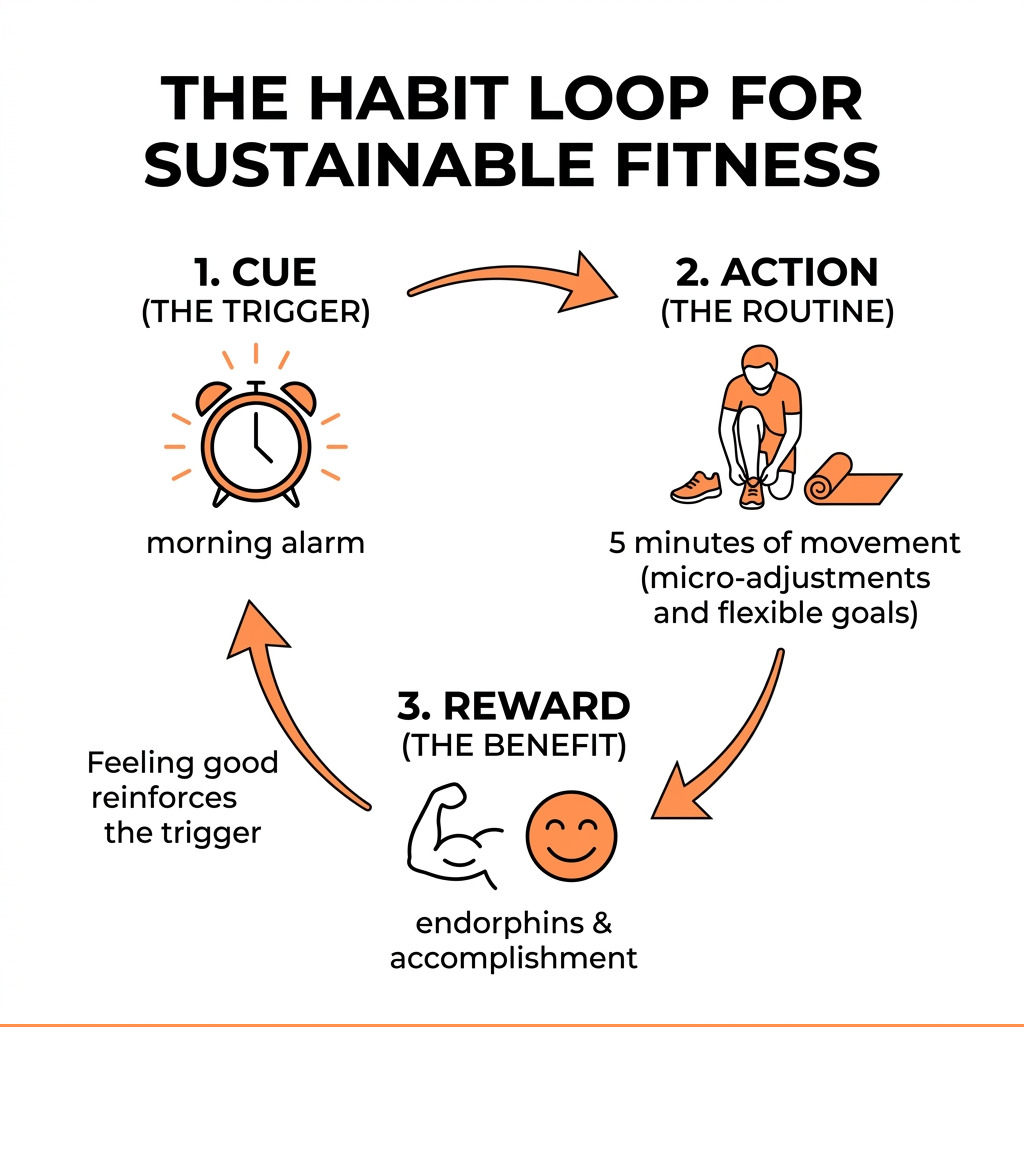
- Micro-adjustments: Squat while you brush your teeth or do calf raises while waiting for the coffee to brew. These “behavioral wins” build momentum.
- Variety: Mixing up your routine prevents the monotony that often leads to quitting.
- Listening to Your Body: Some days you have a “level 10” energy; some days you have a “level 2.” A sustainable plan adapts to your daily capacity rather than forcing a square peg into a round hole.
The Psychology of Lasting Change: Identity and Habits
The secret to long-term success isn’t willpower; it’s a shift in identity. Instead of saying “I am trying to get fit,” the goal is to reach a point where you say “I am a person who doesn’t miss workouts.”
This shift happens through small wins. When you lower the barrier to entry—say, by committing to just five minutes of movement—you make it impossible to say no. Each time you show up, you are “casting a vote” for the person you want to become.
Tracking is vital here, but it must be done correctly. You need to learn how to track your workout results without losing your mind. Focusing on the process (did I show up?) rather than just the outcome (did the scale move?) is what builds a resilient self-concept. When you stop guessing and start measuring your success, you gain the data needed to make informed adjustments rather than emotional ones.
Building a Balanced Routine: Strength, Cardio, and Recovery
A truly sustainable fitness routine is a balanced one. If you only do cardio, you miss out on the metabolic and bone-density benefits of muscle. If you only lift heavy, you may lack cardiovascular health and mobility.
| Component | Purpose | Recommended Frequency |
|---|---|---|
| Strength Training | Metabolic health, bone density, functional power | 2-4 times per week |
| Cardiovascular | Heart health, endurance, stress relief | 150 mins moderate/week |
| Mobility/Flexibility | Range of motion, injury prevention | Daily or post-workout |
| Active Recovery | Blood flow, mental reset, muscle repair | 1-2 times per week |
For those in Mount Airy or Frederick, we often recommend starting with a step-by-step guide to strength training program to ensure the form is correct and the progression is safe. We believe why balance is a strength game because functional movement—the ability to move through daily life with ease—is the ultimate goal.
Don’t forget the “quiet” side of fitness: recovery. Rest days aren’t “off” days; they are the days your body actually builds the muscle you stimulated during your workout. Using progress tracking helps you see when you’re pushing too hard and when it’s time to dial it back.
Eco-Conscious Practices for a Greener Routine
In May 2026, we recognize that our personal health is inextricably linked to the health of our environment. Sustainable fitness isn’t just about your muscles; it’s about the footprint you leave behind.

1. Sustainable Gear Selection The fitness apparel industry has historically been a major contributor to fast-fashion waste. To “green your routine,” look for gear made from:
- Recycled Polyester/Nylon: Often made from post-consumer plastic bottles or discarded fishing nets.
- Tencel (Lyocell): A biodegradable fabric that recycles 99% of the water and solvents used in production.
- Natural Rubber or Cork: Excellent alternatives to PVC yoga mats, which can off-gas harmful chemicals.
2. Plastic-Free Hydration The human body is approximately 60% water, making hydration essential. However, the fitness world’s reliance on single-use plastic bottles is a major issue. Switching to a stainless steel or glass bottle is one of the easiest eco-wins you can achieve.
3. Green Gyms and Outdoor Workouts Whenever possible, take your workout outside. The “most sustainable gym” is the one that requires no electricity for lighting or HVAC. Trail running in Carroll County or bodyweight circuits in a local Frederick park connect you with nature while reducing your carbon footprint.
4. Plant-Based Nutrition Supporting your body with whole, plant-rich foods is often cited as one of the most effective personal actions for the climate. Shifting toward plant-based proteins like lentils, chickpeas, or pumpkin seeds can provide the amino acids needed for recovery with a fraction of the environmental cost of traditional whey or beef.
Eco-Conscious Fitness Guide: Sustainable Gear, Green Gyms & Low-Impact Workouts Sustainable Fitness Practices for an Eco-Conscious Lifestyle
Frequently Asked Questions about Sustainable Fitness
What is the difference between sustainable fitness and traditional exercise?
Traditional exercise often focuses on short-term aesthetic goals (e.g., “getting a beach body”) through high-intensity, often grueling programs. Sustainable fitness focuses on the “long game.” It prioritizes health, functionality, and psychological well-being, ensuring the routine can be maintained regardless of life’s ups and downs. It’s about building a lifestyle, not finishing a 30-day challenge.
How can I start a fitness routine if I have a busy schedule?
The key is to “reduce task demand.” If you can’t get to the gym for an hour, do 15 minutes of functional movement at home. Schedule your workouts as non-negotiable appointments in your calendar. A “bad” workout that you actually did is infinitely better for your habit formation than the “perfect” workout you skipped.
Why is professional coaching important for long-term adherence?
Accountability is often the missing piece in the fitness puzzle. A coach provides not just the “what” (the exercises) but the “why” and the “how.” They help you navigate injuries, plateaus, and schedule changes. If you’re unsure where to start, check out the complete guide to finding online personal trainers to find a partner who understands your specific needs and local lifestyle in Maryland.
Sustainable Fitness Lifestyle: How to Lift Without Wrecking the Planet – Fitness – Exercises, Fitness & Nutrition, and Fitness Articles The Ultimate Guide Sustainable Fitness Routine 2025
Conclusion
Creating a sustainable fitness routine is perhaps the greatest gift you can give your future self. It’s about more than just looking better; it’s about moving better, feeling better, and ensuring you have the energy to enjoy your life in Mount Airy, Frederick, and beyond.
At Primedy Health, we specialize in coach-led strength training and health coaching designed for “real lives.” We don’t believe in gimmicks or overnight transformations. Instead, we provide structured, sustainable programs with objective progress tracking so you always know where you stand.
Whether you are looking for in-person support or the flexibility of online coaching, our mission is to help you build a routine that lasts a lifetime.
Ready to stop the cycle of starting and stopping? Join our Health Club today and let’s build your sustainable future together.