
Why an Objective Coaching Progress System Changes Everything
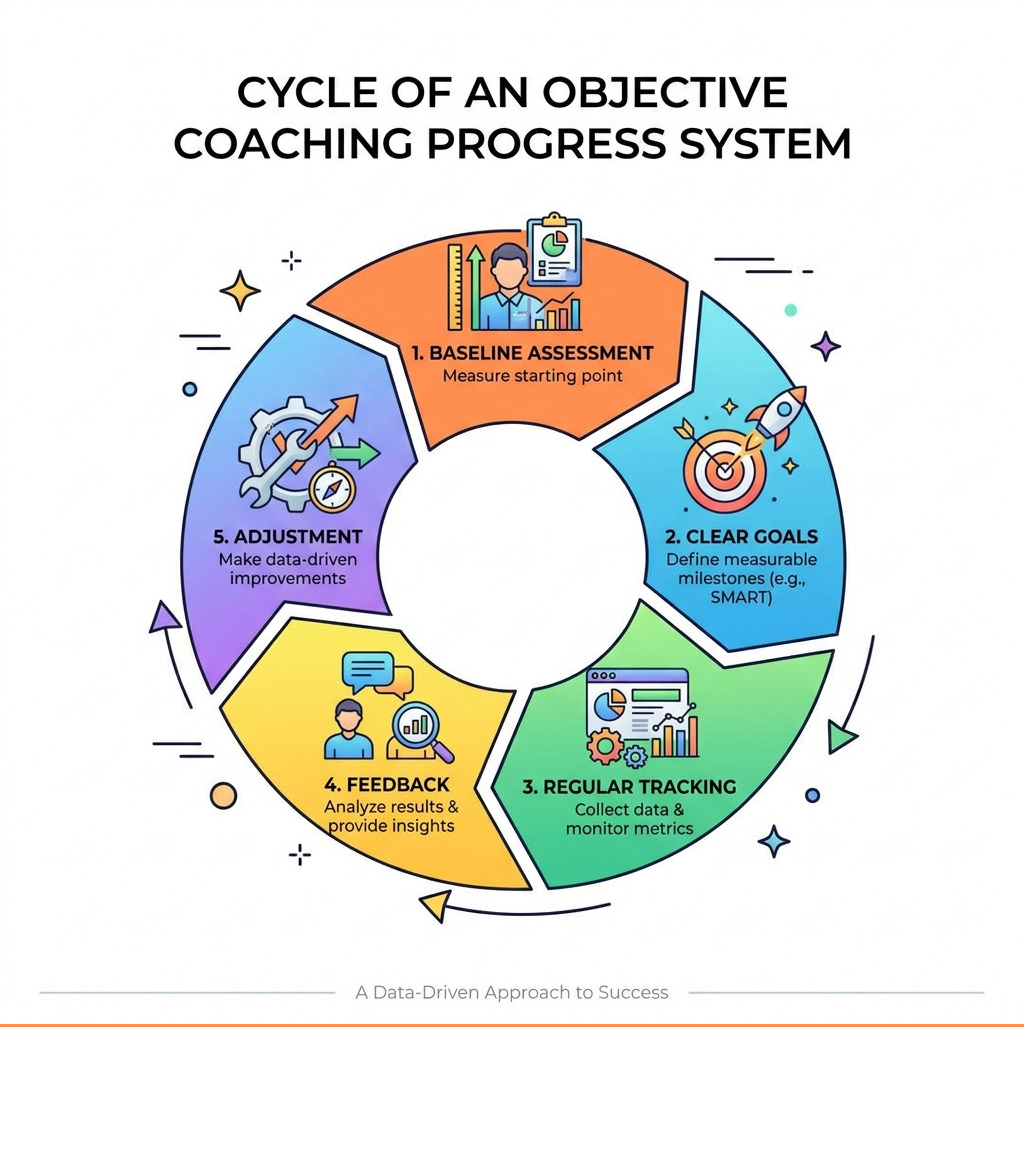
An objective coaching progress system is a structured approach to tracking client growth using measurable data, clear milestones, and evidence-based frameworks — so both coach and client always know exactly where they stand.
Here’s what it typically includes:
- Baseline assessment — measuring where the client starts
- Clear, measurable goals — using frameworks like SMART or EXACT
- Regular progress check-ins — weekly, biweekly, or monthly data reviews
- Key performance indicators (KPIs) — specific numbers to track (strength gains, habit streaks, biometrics)
- Feedback loops — structured reflection and course correction
Most people who try to get healthier or build better habits rely on gut feeling. They ask themselves, “Am I doing better than last month?” — and hope the answer is yes.
That’s a problem.
Without a system to measure progress, it’s easy to feel like you’re working hard but going nowhere. Motivation fades. Old habits creep back. And the cycle of starting over begins again.
The research backs this up. Studies show that only about 30% of people consistently implement new practices after traditional training or coaching. But when systematic progress monitoring is introduced, implementation rates can double. That’s not a small difference — that’s the gap between stalling out and actually changing.
For busy adults juggling work, family, and health goals, this matters even more. You don’t have time to waste on guesswork. You need a coaching approach that tells you — with data, not vibes — whether what you’re doing is working.
The Core of an Objective Coaching Progress System
At its heart, an objective coaching progress system is about evidence-based coaching. It moves the conversation from “How do you feel?” to “What does the data show us?” While feelings are important, they are often secondary to the behavioral consistency required for long-term health.
In April 2026, the coaching industry has shifted heavily toward accountability. We’ve learned that high-level performance optimization isn’t just for professional athletes; it’s for anyone in Mount Airy or Frederick looking to improve their quality of life. By using systematic progress monitoring research, we can ensure that the time you spend in the gym or in a coaching session actually translates to real-world results. This data-driven clarity is exactly what we provide through our Progress Tracking protocols.
Why Subjective Feedback Fails
We’ve all been there: you finish a workout or a coaching session and feel a “runner’s high.” You think you’re making massive strides. But three weeks later, you realize your habits haven’t actually changed. This is because subjective feedback is riddled with bias. We tend to remember our best days and ignore our inconsistent ones.
Vague milestones like “I want to get stronger” or “I want to eat better” lack the “teeth” needed for true accountability. Research indicates that without an objective lens, only about 30% of individuals implement new practices consistently. Subjective feedback fails because it doesn’t provide a “mirror” to our actual behavior; it only reflects our current mood.
The Impact of Real-Time Monitoring
When we shift to real-time monitoring, everything changes. Systematic monitoring has been shown to lead to twice the implementation rate of new practices compared to traditional methods. Why? Because it creates a tight loop between action and awareness.
If you can see a digital dashboard showing that your strength is increasing by 2% week-over-week, or that your sleep quality is improving alongside your new evening routine, you are much more likely to stick with it. This behavioral consistency is the secret sauce of Performance Coaching Success. It turns “trying” into “doing” by providing immediate proof of concept.
Effective Frameworks: SMART, EXACT, and GARR
To make an objective coaching progress system work, we need a language for our goals. We don’t just pick a number out of thin air. We use structured frameworks to ensure every goal is aligned with your long-term vision. Whether we are using Pre-Designed Programs or custom routines, the framework remains the same.
A key part of Transformational Coaching Goals is making sure they aren’t just clinical—they need to be meaningful.
Leveraging AI in an Objective Coaching Progress System
In 2026, technology has become a silent partner in the coaching relationship. Tools like MirrorTalk and M2 hardware allow for continuous growth by capturing data that the human eye might miss. AI can identify patterns in your progress—perhaps you always hit a plateau on Tuesday mornings, or your heart rate variability drops after a specific type of stress.
This automated feedback doesn’t replace the coach; it empowers the coach. It allows us to provide personalized recommendations based on pattern recognition rather than generic templates. It’s about creating a culture where reflection and improvement happen naturally because the data is always available.
The GARR Method for Sustainable Results
One of the most effective frameworks we use is the GARR method. It ensures that your goals are grounded in reality:
- Ground: Where are you starting? We look at your training history, injuries, and current lifestyle.
- Aim: What is the specific target? We connect this to your “why” to ensure commitment.
- Resources: What do you have? This includes time, energy, and support systems.
- Recipe: What is the plan? We build a challenging but doable program.
This reality-based coaching is the foundation of our Health Club Scan and Plan, ensuring that we never build a program on assumptions.
Tools and Metrics for Tracking Growth
What do we actually measure? In an objective coaching progress system, we look at a mix of hard numbers and behavioral markers. We use these to help you prepare for coaching sessions so that our time together is spent on strategy, not just reporting.
For those in our Personal Training programs, we might track:
- KPIs (Key Performance Indicators): Weight lifted, reps completed, or body composition percentages.
- Biometrics: Resting heart rate, sleep duration, and blood pressure.
- 360 Assessments: Feedback from your environment or self-assessment tools that quantify your energy levels and mindset.
Establishing Baselines and Milestones
You can’t know how far you’ve gone if you don’t know where you started. We begin every engagement with an initial assessment to establish a baseline. From there, we set short-term wins (milestones) that lead to your long-term vision.
| Metric Type | SMART Example | EXACT Example |
|---|---|---|
| Strength | Increase bench press by 10lbs in 4 weeks. | Hit a new personal best that makes me feel powerful. |
| Consistency | Attend 3 sessions per week for a month. | Complete a 30-day “streak” of movement. |
| Health | Lower body fat by 2% in 3 months. | Reach a body composition that boosts my confidence. |
Integrating Qualitative Insights with Hard Data
While we love data, we aren’t robots. A truly holistic view requires integrating qualitative insights—how you feel, your stress levels, and your self-awareness. Interestingly, over 70% of coached employees report building better relationships with coworkers. This “soft” metric is just as important as your squat max. We use narrative feedback to color in the lines of the hard data, ensuring we are coaching the whole person, not just the numbers.
Navigating Pitfalls and Ensuring Data Validity
Not all data is good data. To maintain a robust objective coaching progress system, we must ensure the tools we use are reliable and scientifically valid. This is especially true in Executive Coaching Examples, where the metrics might involve leadership competencies, or in our Group Training sessions where we track collective progress.
Avoiding the Sunk Cost Trap in Your Objective Coaching Progress System
A common pitfall is the “sunk cost trap”—continuing with a goal just because you’ve already put time into it, even if it’s no longer serving you. An objective system allows for a pivot. By using commitment scales (0-10) and regular objective reviews, we can see when a strategy is yielding diminishing returns. If the data shows a plateau that isn’t budging, we have the evidence needed to change the “Recipe” without feeling like we’ve “failed.”
Overcoming Resistance to Data
Some people find data intimidating. It can feel like a judgment. We combat this by fostering a growth mindset and psychological safety. Vulnerability is a part of the process. When you see your progress dashboard, it isn’t a grade; it’s a map. It shows us where the roadblocks are so we can navigate around them together.

Frequently Asked Questions about Coaching Progress
How do I know if my coaching metrics are valid?
Validity means the tool measures what it’s supposed to measure. We use evidence-based tools that have been vetted for reliability. If we are measuring strength, we use calibrated equipment and standardized movements. If we are measuring “wellness,” we use validated self-assessment scales that have been shown to correlate with actual health outcomes.
Can an objective system work for “soft skills” like leadership?
Absolutely. While leadership feels subjective, we can quantify it through 360-degree feedback, frequency of specific behaviors (like providing feedback to a team), and even AI-driven sentiment analysis of communication. By turning a “feeling” into a frequency, it becomes measurable.
What is the role of the client in data collection?
The client is the primary data source. Whether it’s wearing a fitness tracker, logging meals, or completing a weekly reflection, the system only works if the client participates. Our job as coaches is to make this as frictionless as possible, using technology to automate the boring parts so you can focus on the growth.
Conclusion
In the end, stop guessing. Whether you are in Mount Airy, Frederick, or anywhere in Carroll County, your health is too important to leave to chance. A robust objective coaching progress system provides the accountability, sustained motivation, and clear evidence you need to succeed.
By grounding your goals in reality, using the right tools, and staying flexible enough to pivot when the data demands it, you can turn your aspirations into achievements. We are here to provide the structure so you can provide the effort.
Ready to see what the data says about your potential? Start your journey with professional Health Coaching at Primedy Health today.