
Why Most Coaching Fails Without Personalized Progress Tracking
A personalized progress tracking coach is a coach who uses data — your data — to guide every decision about your training, habits, and health. Instead of guessing or following a generic plan, they track real metrics over time and adjust your program based on what the numbers actually show.
Here’s what that looks like in practice:
- Strength metrics — how much you’re lifting, your one-rep max, total weekly volume
- Body composition — weight, body fat percentage, circumference measurements
- Lifestyle data — sleep quality, daily steps, hydration, energy levels
- Subjective feedback — mood, soreness, perceived effort (RPE)
- Habit adherence — workout completion rates, nutrition consistency
The result: a coach who can show you your progress, not just tell you to trust the process.
Think about this scenario. You’ve been training for weeks. You feel like nothing is working. Then your coach pulls up a chart — your squat has gone up 30 pounds, your waist is two inches smaller, your average sleep score is trending upward. Suddenly, the frustration lifts. That’s what personalized tracking does. It turns vague effort into visible, undeniable results.
The coaching industry has grown to reflect this demand. As of 2024, the global coaching market was valued at $6.25 billion, with projections putting it at $7.30 billion in 2025 — and a big driver of that growth is the shift toward data-driven, accountable coaching relationships.
But not all coaches track progress the same way. And for busy adults juggling work, family, and the mental weight of inconsistent results, the difference between a coach who tracks and one who doesn’t can mean the difference between lasting change and another abandoned program.
Why You Need a Personalized Progress Tracking Coach in 2026
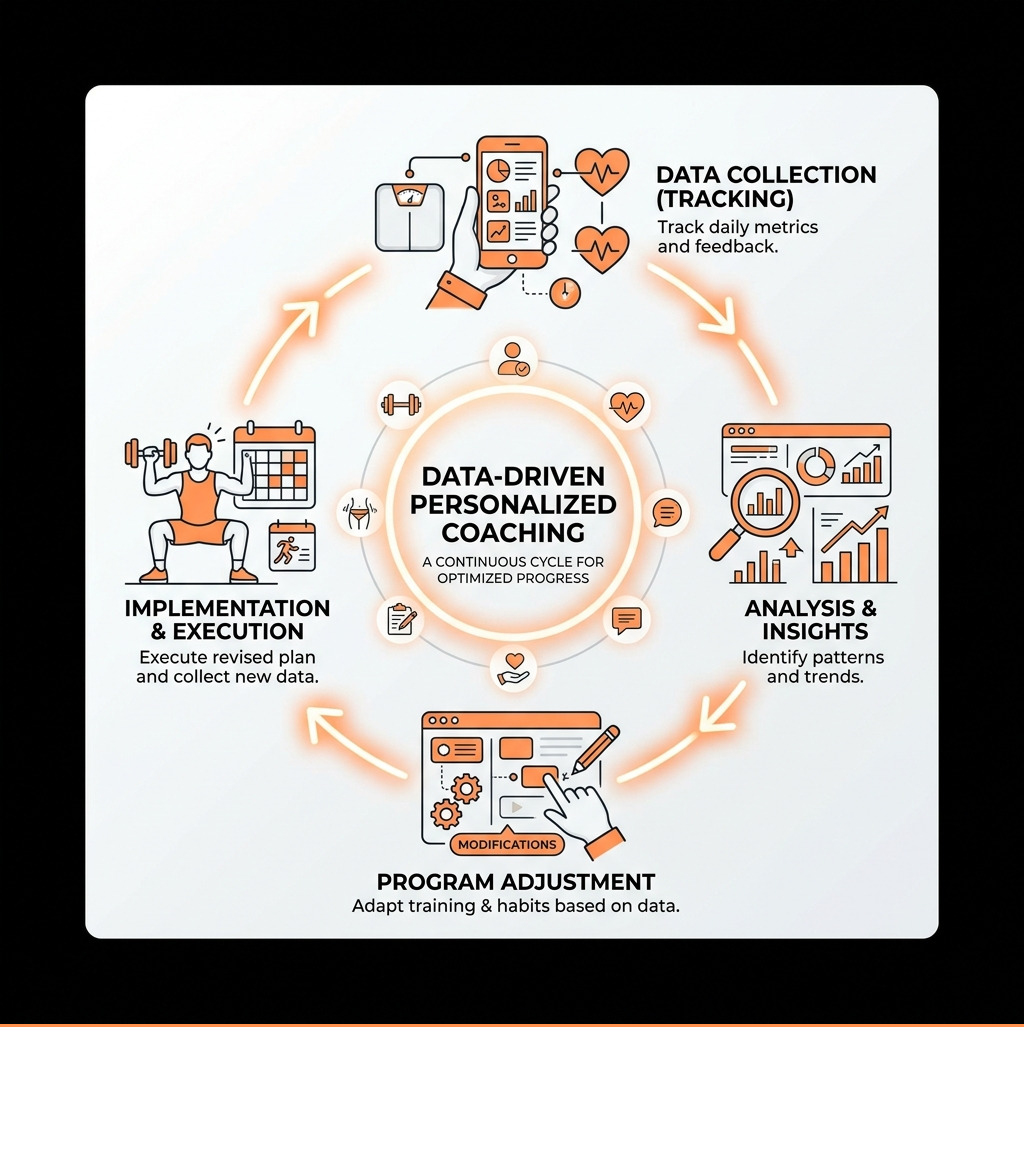
In April 2026, the standard for professional coaching has shifted. It is no longer enough for a coach to simply “cheer you on” or provide a list of exercises. As the global coaching industry approaches its $7.30 billion valuation, the differentiator between an amateur and a professional is Progress Tracking.
For us at Primedy Health, tracking is the foundation of professional justification. It provides a level of transparency that builds deep trust between us and our clients. When you can see a digital dashboard that reflects your hard work, the “trust the process” mantra becomes an “observe the evidence” reality.
One of the biggest hurdles in any fitness journey is the dreaded plateau. Without a personalized progress tracking coach, a plateau feels like a dead end. However, with the right coaching tools for tracking progress, we can identify exactly why progress has stalled. Is it a dip in recovery? A slight decrease in protein intake? Or perhaps a lack of progressive overload in your squat? Data allows us to make surgical adjustments rather than sweeping, unnecessary changes to your program.
Beyond the Scale: Metrics That Define Real Progress
If you only look at the scale, you’re only seeing about 10% of the story. A personalized progress tracking coach looks deeper. We use a variety of metric tracking solutions to ensure we are capturing the full picture of your health.

Strength and Performance Metrics
Numbers don’t lie. We track your One-Rep Max (1RM), 5RM, and total training volume to ensure you are getting stronger. Whether you are training in Mount Airy or virtually, seeing your “Estimated 1RM” trend upward is one of the most powerful motivators available.
Body Composition and Circumference
Weight can fluctuate based on hydration, salt intake, or even stress. This is why we prioritize circumference measurements (neck, chest, waist, hips, biceps, thighs) and body fat percentage. Often, a client will see the scale stay the same while their waist drops an inch—this is a clear sign of body recomposition (building muscle while losing fat), a win that would be missed without detailed tracking.
Subjective Wellness and Lifestyle
How do you feel? We track subjective data like:
- Rate of Perceived Exertion (RPE): How hard did that set actually feel?
- Sleep Quality: Are you getting the deep recovery needed for muscle growth?
- Energy Levels: Are we pushing too hard, or do you have more in the tank?
- Mood and Stress: Life happens. If you’ve had a high-stress week in Frederick, we might need to “pivot” your training intensity to prevent burnout.
How Data-Driven Coaching Transforms Motivation and Accountability
Motivation is a feeling, but momentum is a result of data. When you see a “streak” of completed habits on your dashboard, your brain releases dopamine. This positive reinforcement builds the momentum necessary to stay consistent when motivation inevitably dips.

By using real-time feedback, we turn “small wins” into a visible roadmap. You aren’t just working toward a goal six months away; you are winning every single day you check off a habit or log a personal best.
How a Personalized Progress Tracking Coach Enhances Accountability
Accountability is often the “missing ingredient” in fitness. We use several triggers to keep you on track:
- Automated Reminders: Gentle nudges to log your metrics or finish your workout.
- Verified Action Data: We don’t just ask if you did the work; the data shows us. This “objective reality check” keeps everyone honest.
- Client Engagement: By having a dedicated workspace to view your progress, you become an active participant in your health, not just a passive follower of a plan.
- Habit Formation: We break down big goals into tiny, trackable daily actions, ensuring sustainable behavioral change.
Integrating Technology for Holistic Health Optimization
We live in an era of incredible wearable technology. A personalized progress tracking coach in 2026 knows how to integrate this data into a cohesive strategy. We don’t just look at your workouts; we look at how your body recovers from them.
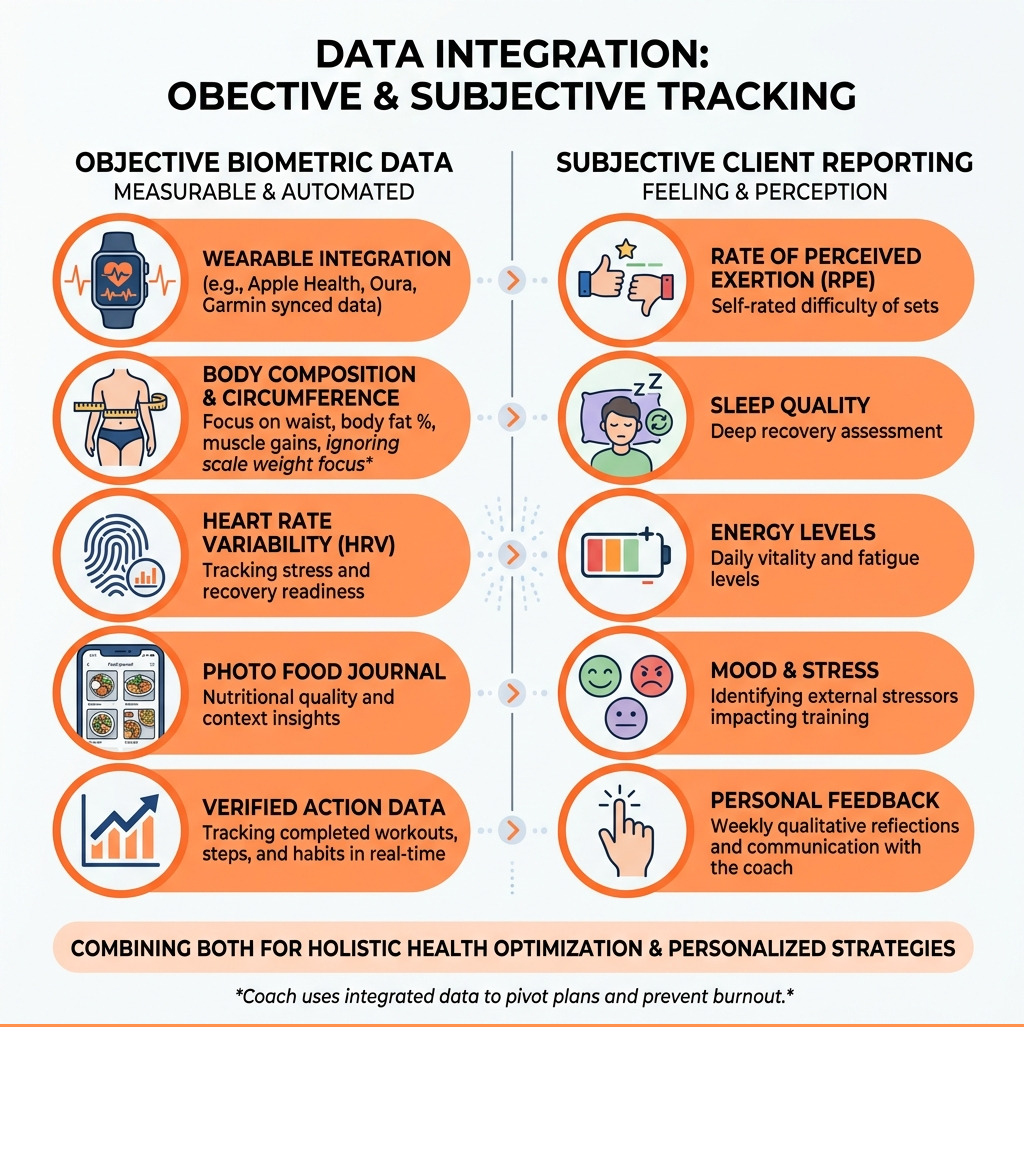
By syncing with devices like Apple Health, Oura, or Garmin, we can monitor your Heart Rate Variability (HRV) and resting heart rate. This allows us to practice “biohacking” for the average person—adjusting your intensity based on your body’s actual readiness.
We also utilize photo food journals. Traditional calorie counting can be tedious and prone to error. A photo journal provides real-world nutrition insights, allowing us to see the quality of your meals and the context of your eating habits. This is essential for metabolic health and long-term longevity.
The Business of Results: Why Tracking Leads to Long-Term Success
From a business perspective, tracking is what ensures our clients stay with us for years, not just weeks. When you can see your ROI (Return on Investment) through multi-year progress graphs, the value of coaching becomes undeniable.
The Business Benefits of Tracked Coaching:
- Higher Retention: Clients stay because they see they are winning.
- Social Proof: Your data-backed transformations become the best marketing we have.
- Data-Driven Adjustments: We never have to guess why something isn’t working.
- Sustainable Change: We focus on what works for your real life in Maryland, not a fitness influencer’s highlight reel.
The Impact of a Personalized Progress Tracking Coach on Behavioral Change
Sustainable change happens at the intersection of mental performance and physical action. By tracking cognitive markers—like your reaction to stress or your ability to stick to a schedule—we help you integrate fitness into your lifestyle. This isn’t a “12-week challenge”; it’s a long-term adherence strategy that aligns your daily actions with your ultimate goals.
Frequently Asked Questions about Progress Tracking
What specific metrics should a coach track for fat loss?
While weight is a starting point, we focus on circumference measurements, body fat percentage, and habit adherence (like protein intake and daily step counts). These metrics tell us if you are losing fat or just losing water and muscle.
How often should my progress be assessed to see results?
We monitor daily habits and weekly strength outputs constantly. However, a “deep dive” assessment into body composition and performance usually happens every 4 to 6 weeks. This gives your body enough time to show meaningful physiological changes.
Can personalized tracking help if I have reached a plateau?
Absolutely. A plateau is usually just a data point we haven’t solved yet. By looking at your recovery data, nutrition logs, and training volume, a personalized progress tracking coach can find the “bottleneck” and adjust your program to get things moving again.
Conclusion
At Primedy Health, we believe that “what gets measured, gets managed.” Whether you are visiting us in Mount Airy, MD, or working with us through our online platforms in Frederick and Carroll County, our goal is to provide structured, sustainable programs that fit into your real life.
We don’t want you to guess. We want you to know. By combining elite coaching with objective progress tracking, we ensure that every rep you perform and every meal you eat is moving you toward the version of yourself you want to become.
Ready to stop guessing and start growing? Get started with customized virtual programming and experience the power of a coach who actually tracks your progress.