
Why Fitness Coaching Goal Setting Determines Whether You Succeed or Quit
Fitness coaching goal setting is the structured process of defining, planning, and tracking your fitness targets with the guidance of a coach — and it’s one of the strongest predictors of long-term success.
Here’s what effective fitness coaching goal setting looks like in practice:
- Assess your starting point — current fitness level, schedule, and lifestyle
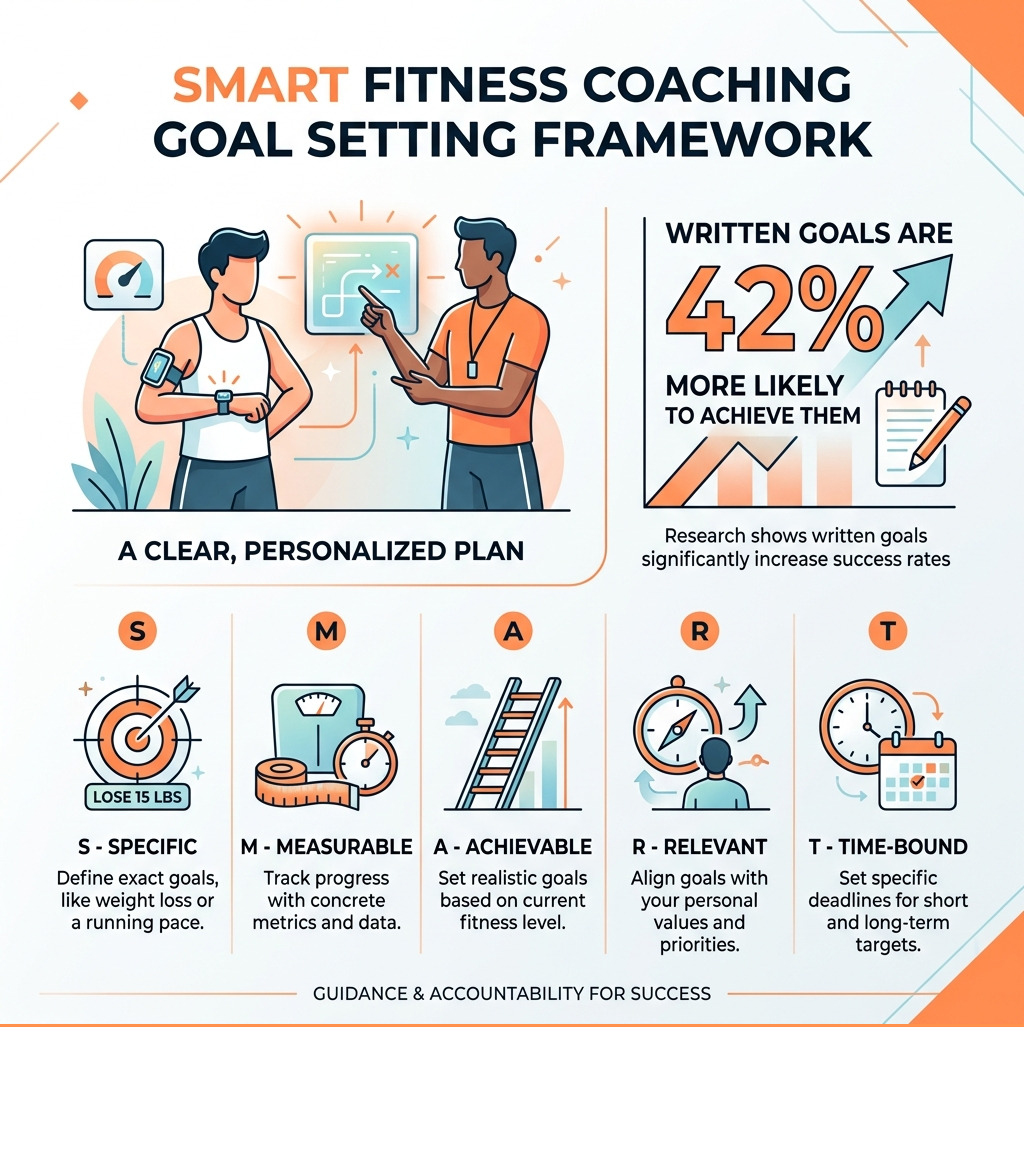
- Set SMART goals — Specific, Measurable, Achievable, Relevant, Time-bound
- Choose goal types — outcome (lose 15 lbs), performance (run a mile in 9 min), and process (work out 3x/week)
- Break goals into mini-milestones — weekly and monthly checkpoints
- Track and adjust — review progress every 4-6 weeks with your coach
- Build accountability — written goals, check-ins, and habit systems
Most people start the year fired up. By spring, the momentum is gone.
It’s not a willpower problem. It’s a planning problem.
Research shows that only 19% of people who set New Year’s resolutions actually stick with them long-term. Yet people who write down specific goals are 42% more likely to achieve them than those who don’t.
The gap between intention and result almost always comes down to one thing: how the goal was set in the first place.
Vague goals like “get fit” or “lose weight” give your brain nothing concrete to act on. They fade under the pressure of a busy schedule, a stressful week, or one missed workout.
A fitness coach changes that. They help you replace fuzzy wishes with a clear, personalized plan — one built around your real life, your actual starting point, and goals that you care about.
This guide walks you through every step of that process.
Fitness coaching goal setting terms simplified:
The Science of Fitness Coaching Goal Setting

When we talk about fitness coaching goal setting, we aren’t just talking about picking a number on a scale. We are looking at a psychological tool that bridges the gap between where you are in Mount Airy or Frederick and where you want to be. The science is clear: the human brain responds to structure.
As mentioned, people who write down their goals are 42% more likely to achieve them. This isn’t magic; it’s cognitive encoding. When you write a goal, your brain treats it as a directive rather than a passing thought. In the context of a professional health coaching program, this means aligning your physical efforts with your mental and emotional readiness.
In April 2026, we understand more than ever that fitness is a cognitive process. It requires “self-regulation”—the ability to monitor your own behavior and make choices that align with your long-term vision. Without a coach to help navigate this science, most people rely on fleeting motivation, which is why the resolution retention rate sits at a dismal 19%.
Why Most Fitness Goals Fail
Most fitness journeys in Carroll County fizzle out by March or April because they lack three critical ingredients: specificity, realism, and accountability.
- Vague Intentions: Saying “I want to be healthier” is like putting “somewhere warm” into a GPS. You’ll never know if you’ve arrived.
- Over-Ambition: We see it often—someone who hasn’t exercised in years tries to go from zero to six days a week. This leads to burnout and injury.
- The Habit Disconnect: Goals fail when they aren’t tied to daily habits. If your goal is to lose weight but your habit is skipping breakfast and overeating at night, the goal and the habit are at war.
- Lack of Accountability: When you’re the only one who knows about your goal, it’s easy to negotiate with yourself.
Understanding Everything You Need to Know About In-Person Fitness Coaching can help you see how a professional provides the external structure needed to overcome these pitfalls.
The Power of Specificity in 2026
Specificity is the antidote to mental hurdles. When a goal is specific, the brain doesn’t have to waste energy deciding what to do. At Primedy Health, we focus on turning “get strong” into “increase my deadlift by 10 pounds by the end of May.”
By being specific, we reduce the “cognitive load.” You don’t have to show up at the gym and wonder what to do; the plan is already there. This allows you to focus all your energy on the execution. Specificity also allows for better self-regulation. If you know exactly what you’re aiming for, you can objectively measure if you’re on track or if we need to adjust the sails.
The SMART Framework and Goal Hierarchies

To make fitness coaching goal setting effective, we use the SMART framework. This isn’t just a corporate buzzword; it’s a proven method to ensure your goals are actionable.
- Specific: Clear and well-defined.
- Measurable: You can track progress with data.
- Attainable: Challenging but reachable given your current life.
- Relevant: It actually matters to you and your long-term health.
- Time-bound: There is a deadline to create a sense of urgency.
For more tailored support, you can explore our health coaching services to see how we apply this framework to every client we work with in Maryland.
Applying SMART to Fitness Coaching Goal Setting
When we apply SMART to your training, we move away from “I want to lose weight” and toward “I will lose 12 pounds in 10 weeks by attending three strength sessions per week and hitting my protein targets.”
This approach makes targets quantifiable. It also ensures timelines are realistic—for example, aiming for 1-2 pounds of weight loss per week rather than 20 pounds in a month. Crucially, these goals must be client-generated. We don’t tell you what your goals should be; we help you refine the goals you already have. This ensures the motivation is intrinsic. You can see how this fits into a broader Step by Step Guide to Strength Training Program.
Outcome, Performance, and Process Goals
To truly succeed, we need to layer your goals. Relying only on an “outcome” (like a number on the scale) can be discouraging if the scale doesn’t move for a week. That’s why we use a hierarchy:
| Goal Type | Focus | Example |
|---|---|---|
| Outcome Goal | The end result | Lose 15 lbs by July |
| Performance Goal | A specific standard or skill | Perform 10 unbroken push-ups |
| Process Goal | Daily/Weekly behaviors | Walk 8,000 steps every day |
Process goals are the “secret sauce.” They are 100% within your control. You can’t always control exactly how much weight you lose in a week, but you can control how many times you went to the gym. Focusing on process goals has been shown to increase exercise enjoyment because it provides frequent “small wins.”
Building an Actionable Plan with a Coach
Setting the goal is just the beginning. The next step is building the roadmap. This starts with a thorough self-assessment. Before we pick up a dumbbell, we need to know: How does your current lifestyle in Carroll County align with your vision? What has worked for you in the past? What are your non-negotiables?
We use a technique called “motivational interviewing.” Instead of lecturing you, we ask questions that help you uncover your own “why.” This creates a deep sense of value alignment. If you’re wondering about the best format for this, consider Why Your Next Coach Should Be Online and Objective to understand how data-driven coaching works.
Collaborative Fitness Coaching Goal Setting
We believe the best plans are collaborative. We combine our expertise in exercise science with your expertise in your own life. We start by taking baseline measurements—strength, cardiovascular endurance, and movement quality.
This data prevents us from setting “mismatched” goals. If your baseline shows you can currently run a 12-minute mile, we won’t set a goal for a 6-minute mile in four weeks. That’s a recipe for frustration. Instead, we set targets that appropriately challenge you while remaining achievable. This collaborative spirit is at the heart of our Customized Virtual Programming.
Breaking Down Big Wins into Mini-Goals
A 50-pound weight loss goal or a marathon aspiration can feel overwhelming. To maintain momentum, we break these down into 12-week phases. Within those phases, we set weekly milestones.
Think of these as “micro-goals.”
- Week 1: Hit 3 workouts and drink 80oz of water daily.
- Week 4: Increase squat weight by 5 pounds.
- Week 8: Complete a 5K training run without stopping.
These mini-goals create a “success loop.” Every time you hit a milestone, your brain releases dopamine, which fuels the motivation to tackle the next one. You can Crush Your Goals with Personalized Health Coaching Plans and Progress Logs by using our structured tracking systems.
Overcoming Barriers and Tracking Progress
Life in Maryland doesn’t stop just because you have a fitness goal. Work meetings run late, kids get sick, and energy levels dip. Part of fitness coaching goal setting is “pre-loading” your response to these barriers.
We use strategies like habit stacking—attaching a new habit to an existing one (e.g., doing mobility stretches while your morning coffee brews). We also help you manage your “minimum effective dose.” If you can’t make it to the gym for an hour, can you do 15 minutes of bodyweight exercises at home? Keeping the streak alive is more important than the intensity of a single session. To learn more about this philosophy, read Stop Guessing and Start Measuring Your Success.
Tools for Better Goal Adherence
In 2026, we have incredible tools to help us stay on track. We encourage the use of:
- Wearables: To track sleep, heart rate variability (HRV), and daily activity.
- Digital Journals: To log workouts and nutrition.
- Checkpoint Systems: Weekly reviews to catch “drift” early.
These tools turn subjective feelings (“I think I’m doing okay”) into objective data (“I’ve hit 90% of my workouts this month”). This data-driven approach allows us to make “dynamic adjustments.” If your recovery scores are low, we might pivot to a lighter training week rather than pushing through and risking burnout. See our guide on How to Track Your Workout Results Without Losing Your Mind for practical tips.
Adapting Goals Flexibly
One of the biggest reasons people quit is “all-or-nothing” thinking. They miss three days and decide the whole month is a wash. We teach goal flexibility.
If a life disruption happens—like a job change or a minor injury—we don’t scrap the goal. We adapt it. We look at the “fatigue data” and the “life data” and adjust the plan. Maybe the goal shifts from “performance” to “maintenance” for a few weeks. This strategic pivot ensures you stay in the game for the long haul. You can find More info about progress tracking to see how we manage these transitions.
Frequently Asked Questions about Fitness Coaching Goal Setting
How often should I review my fitness goals?
We recommend a two-tier review system. You should do a quick weekly check-in on your process goals (did I hit my workouts and water targets?). Then, every 4 to 6 weeks, you should have a formal review of your performance and outcome goals with your coach. This allows enough time for physical changes to occur while being frequent enough to course-correct if you’ve hit a plateau.
Can I set multiple fitness goals at once?
Yes, but they must be complementary. For example, improving your cardiovascular endurance and building mobility usually work well together. However, trying to run your first marathon and hit a personal record in a heavy powerlifting meet in the same month can lead to “competing demands” on your recovery. We help you prioritize which goal is your “A Race” and which are your “B” or “C” goals.
Why is working with a coach more effective than going solo?
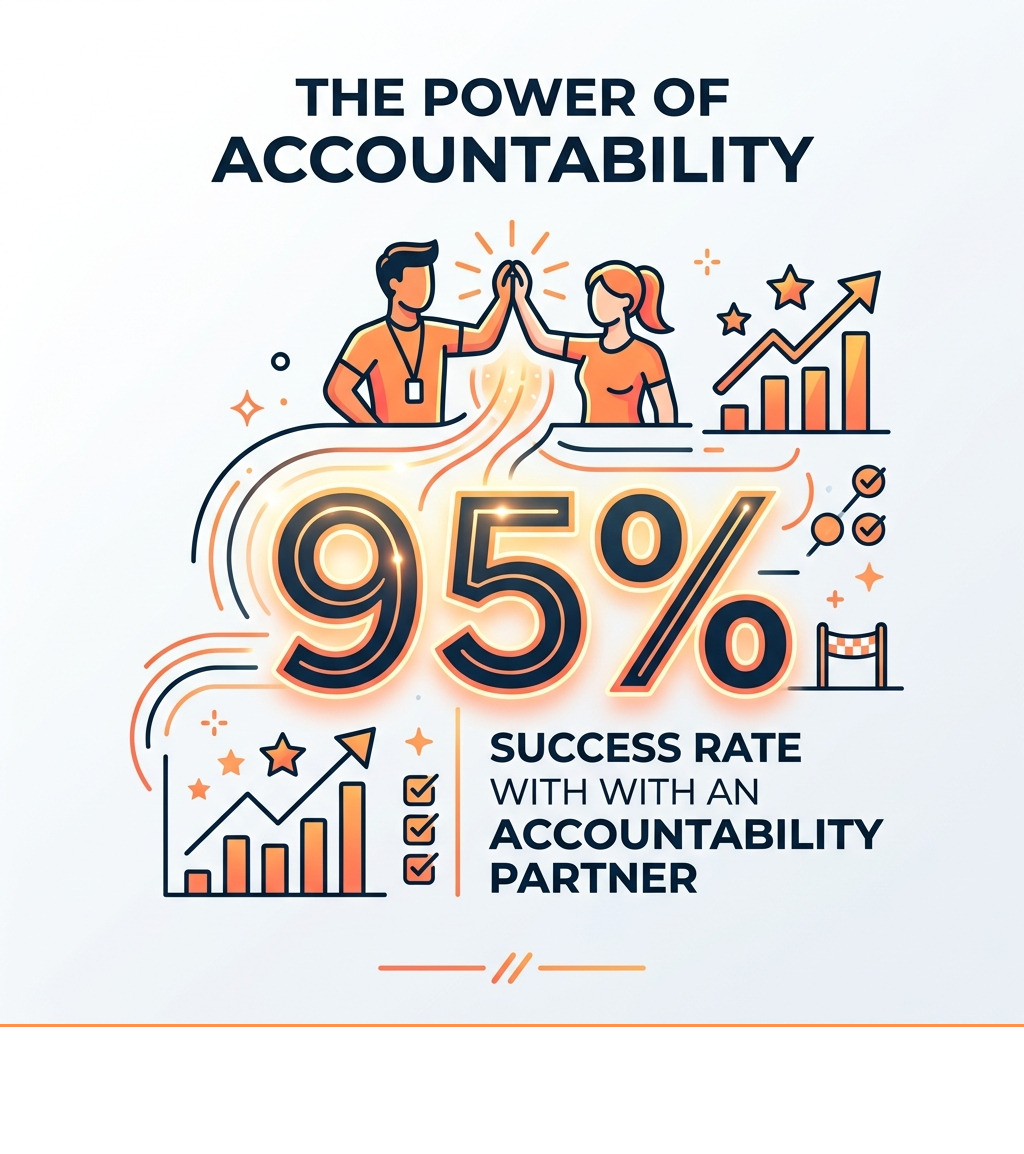
A coach provides three things you can’t give yourself: objectivity, expertise, and external accountability. We see the patterns you might miss, we know how to adjust the science of your program when progress stalls, and we are the person you have to answer to when you feel like skipping a session. Research shows that people with a specific accountability partner are significantly more likely to accomplish their goals.
Conclusion
At Primedy Health, we believe that fitness coaching goal setting is the foundation of every success story we see in Mount Airy, Frederick, and throughout Carroll County. We don’t believe in “random workouts” because they produce random results. Instead, we provide structured, sustainable programs with objective progress tracking designed for real lives.
Whether you are looking for local expertise in Frederick or Mount Airy, the principle remains the same: a clear goal, a solid plan, and a coach by your side.
If you are tired of the cycle of starting and stopping, it’s time to change your strategy. From the broader Maryland area to our local community, professional guidance is the bridge to the results you’ve been chasing.
Ready to stop guessing? Unlock your potential with professional health coaching and let us help you build a plan that actually sticks.