

Why “Say Less, Ask More” Is the Coaching Skill Most Leaders Are Missing
The say less, ask more approach is one of the most practical shifts any leader, manager, or coach can make — and most people are getting it completely backwards.
Here’s the quick answer if you need it now:
Say Less, Ask More — The Core Idea:
- Stop giving advice first. Most leaders jump straight to solutions, which builds dependency and kills ownership.
- Ask one focused question instead. Simple, open questions unlock thinking that advice never reaches.
- Stay curious longer. The person you’re coaching almost always has the answer — your job is to draw it out.
- Use seven key questions to guide any conversation from stuck to unstuck, in 10 minutes or less.
- End with a learning question. “What was most useful for you?” cements progress and gives you feedback.
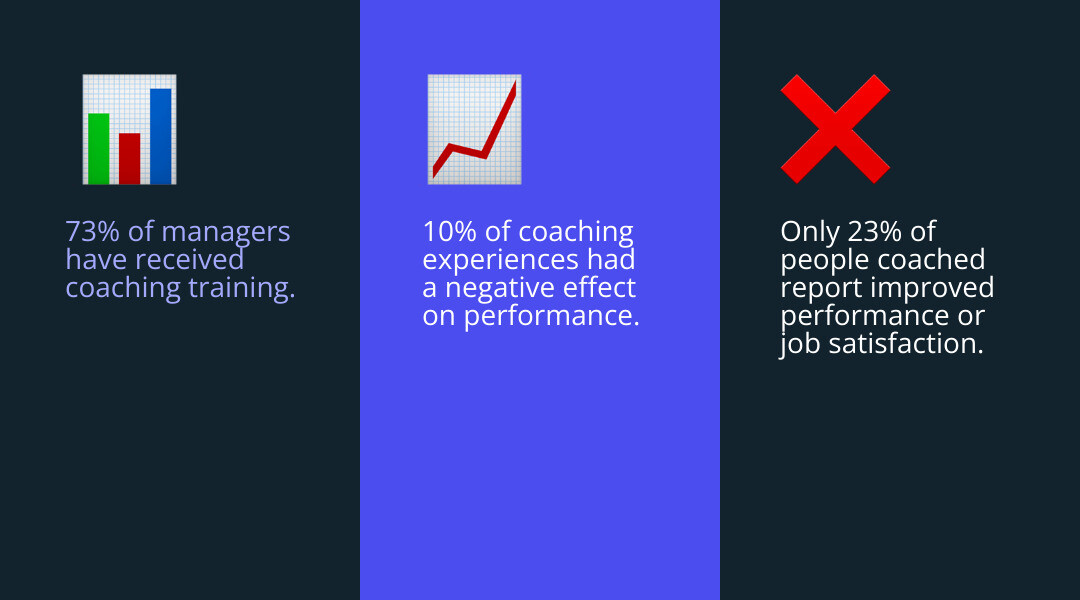
Here’s a striking reality: 73% of managers have received some form of coaching training — yet only 23% of the people being coached felt it actually improved their performance or job satisfaction. Even more alarming, 10% said the coaching they received had a negative effect.
That gap exists for one simple reason: most coaching training teaches theory, not habit. Leaders walk away knowing what coaching is, but not how to weave it into a normal Tuesday.
The fix is surprisingly simple — and it doesn’t require a certification or a full hour blocked on your calendar. It starts with talking less and asking better questions, one conversation at a time.
Say less ask more terms made easy:
The Core Philosophy: Why You Must Say Less, Ask More
At its heart, the philosophy of say less, ask more stems from the work of Michael Bungay Stanier and his influential book, The Coaching Habit. Stanier has trained over 10,000 managers across the globe, and his research highlights a fundamental flaw in modern leadership: we are addicted to giving advice.
When we jump in to solve a problem, we feel helpful. We feel smart. We feel like we’re adding value. But in reality, we are often creating three “vicious cycles”: overdependence (your team can’t move without you), overwhelm (you have too much on your plate because you’re doing everyone else’s thinking), and disconnection (the work loses its meaning for others).
To break these cycles, we need to shift our Talk Less, Ask More ratio. This isn’t just about being polite; it’s about biology.
Taming the Advice Monster
We all have an “Advice Monster.” It’s that voice in your head that starts whispering a solution before the other person has even finished their first sentence. This monster is fueled by psychological rewards. When we give advice, we assert our status and maintain control. It feels safe.
However, the advice we give is rarely as good as we think it is. We usually solve the wrong problem because we haven’t stayed curious long enough to find the real one. To Elevate workplace conversations with these 2 words, we simply have to invite the other person to “say more.” This neutral prompt creates mental breathing room and forces the Advice Monster to stay in its cage.
The Neuroscience of Self-Generated Solutions
There is a profound scientific reason to say less, ask more. When you give someone an answer, the information often goes in one ear and out the other. But when someone generates their own solution, it activates the hippocampus—the part of the brain responsible for long-term memory and learning.
By asking a question, you increase the “TERA quotient” (Tribe, Expectation, Rank, Autonomy). Specifically, you boost Autonomy. When people feel they have a choice and a voice, their brain scans the environment as “safe” rather than “threatening,” allowing for higher-level problem-solving. This is why Say Less, Ask More is the ultimate tool for ownership.

The Seven Essential Questions for Every Conversation
You don’t need a thousand questions to be a great coach. You only need seven. These questions act as “bookends” for any interaction, whether it’s a formal Health Coaching session or a quick 1:1 in a Mount Airy hallway.
Kickstart and AWE: How to Say Less, Ask More in the First Five Minutes
The Kickstart Question is: “What’s on your mind?” It’s the perfect way to bypass small talk and get straight to what matters. It’s open-ended but focused.
The AWE Question is: “And what else?” Stanier calls this the “Best Coaching Question in the World.” The first answer someone gives you is rarely the only answer, and it’s almost never the best one. By asking “And what else?” you buy yourself time to stay curious and prevent yourself from rushing in with a Short Question too early.
The Focus and Foundation Questions
The Focus Question is: “What’s the real challenge here for you?” This is the most critical question in the set. It stops you from “coaching the ghost”—talking about a third party or a vague situation—and brings the focus back to the person standing in front of you.
The Foundation Question is: “What do you want?” It sounds simple, but many people don’t actually know what they want until they are forced to articulate it. In our work with Health Coaching, we find that clarifying the “want” is the difference between a program that sticks and one that fails.
The Lazy, Strategic, and Learning Questions
The Lazy Question is: “How can I help?” This prevents you from “rescuing” someone who didn’t actually ask for help. It forces the other person to make a direct request.
The Strategic Question is: “If you’re saying yes to this, what are you saying no to?” Strategy is about trade-offs. This question helps your team (or yourself) avoid the “overwhelm” cycle by acknowledging that resources are finite.
The Learning Question is: “What was most useful for you?” This is how you end every conversation. It forces the brain to extract the “a-ha” moment and provides you with immediate feedback on your coaching. At Primedy Health, we use this to Get a Coach Who Actually Tracks Your Progress, ensuring every session has a tangible takeaway.

Mastering the 3Ps Framework for Laser-Focused Coaching
To make the say less, ask more habit even more effective, you can filter your questions through the 3Ps framework. This helps you decide which level of the problem you are actually addressing.
| Level | Focus | Example |
|---|---|---|
| Project | The “stuff” of the work | “What’s the real challenge with this report?” |
| Person | Relationships and interactions | “What’s the real challenge for you in managing this client?” |
| Pattern | Recurring behaviors and habits | “What’s the real challenge for you in how you consistently approach deadlines?” |
Coaching the Project
Most conversations start here. It’s tactical. It’s about the “to-do” list. While necessary, if you only coach at the Project level, you are just a glorified project manager. You aren’t actually developing the person.
Coaching the Person and the Pattern
This is where the real growth happens. When you use the Focus Question to look at the Person (how they are showing up) or the Pattern (the habits they’ve built), you are doing deep coaching. This is the same approach we take in our Complete Guide to Finding Online Personal Trainers—we don’t just look at the workout (the project); we look at the lifestyle habits (the pattern) that lead to success.
Breaking Vicious Cycles: From Overwhelm to Empowerment
One of the biggest obstacles to a say less, ask more culture is the Karpman Drama Triangle. This is a psychological model where people play one of three roles: the Victim, the Persecutor, or the Rescuer.
Escaping the Karpman Drama Triangle
Most managers are “Recovering Rescuers.” We see a problem, we see someone struggling (the Victim), and we jump in to save the day. The problem? Rescuing is just a fancy way of saying “giving advice and taking over.” It keeps the other person in a state of dependency.
By using the Lazy Question (“How can I help?”), you shift the dynamic from Rescuer/Victim to Adult/Adult. You empower the other person to take accountability for their own results. This is a core tenet of how to Say less, ask more, and change the way you lead forever.
Practical Strategies to Say Less, Ask More Every Day
How do we make this a habit in May 2026? It starts with small, deliberate changes:
- Embrace the 3-second silence. After you ask a question, wait. It will feel awkward, but it gives the other person time to think.
- “What” not “Why”. Avoid asking “Why did you do that?” It sounds judgmental and puts people on the defensive. Instead, ask “What was the intention behind that?” or “What led to that decision?”
- Use it in email. You don’t have to be face-to-face. Before hitting send on a long paragraph of advice, delete it and replace it with: “What’s the real challenge here for you?”
- Stop Guessing. If you want to see real change, you have to Stop Guessing and Start Measuring Your Success. Use these questions to track how your team’s autonomy is growing over time.
Frequently Asked Questions about Coaching Habits
What is the most powerful coaching question?
While all seven are vital, “And what else?” is often cited as the most powerful. It is the ultimate curiosity tool that prevents the Advice Monster from taking over too early in a conversation.
How do I stop giving advice immediately?
Identify your “triggers.” When do you feel the strongest urge to jump in? Is it when someone looks confused? When you’re in a rush? Once you know the trigger, create a “If/Then” plan: “If I feel the urge to give advice, then I will ask ‘And what else?’ first.”
Why should I avoid asking “Why” questions?
“Why” questions often trigger a “danger” response in the brain. They feel like an interrogation. Switching to “What” questions keeps the conversation objective and focused on the future rather than ruminating on past mistakes.
Conclusion
The journey to say less, ask more isn’t about becoming a different person; it’s about building a better habit. In the environment of Frederick and Carroll County, it’s easy to fall back into the trap of rushing to solutions. But true leadership—and true coaching—is about staying curious just a little bit longer.
At Primedy Health in Mount Airy, MD, we apply these exact principles to our fitness and health coaching. We don’t just tell you what to do; we ask the questions that help you build sustainable, lifelong habits. Whether you are leading a corporate team or leading yourself toward a healthier life, the secret is the same: talk less, listen more, and let the questions do the heavy lifting.
Ready to see what structured, question-based coaching can do for your performance? Start Your Health Coaching Journey with us today and experience the power of a coach who stays curious about your success.