
Why Sustainable Fitness for Seniors Matters More Than You Think
Sustainable fitness for seniors means building a consistent, enjoyable movement habit that protects your health, independence, and quality of life — for years, not just weeks.
Here’s what makes a senior fitness routine sustainable:
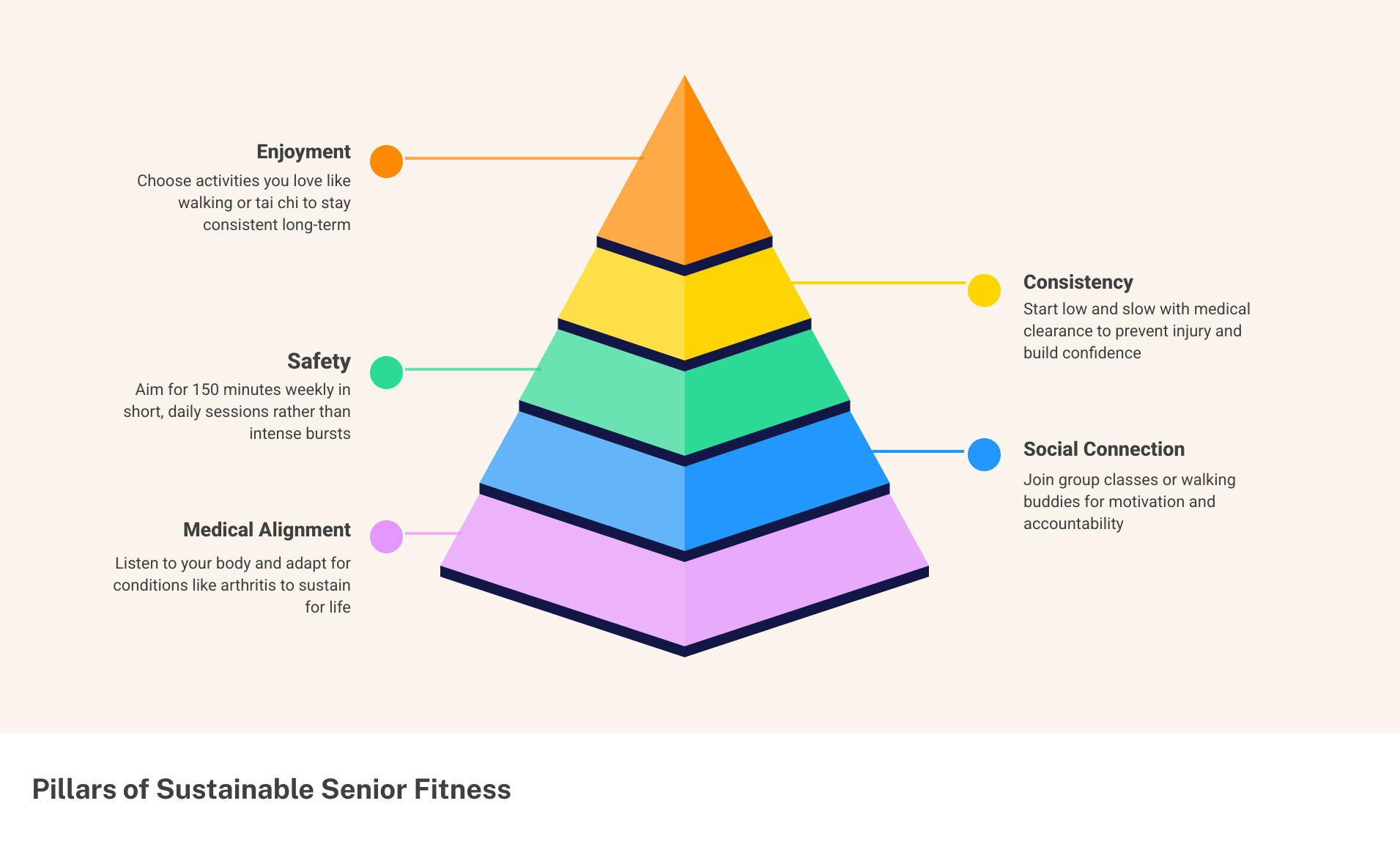
- Start low, go slow — begin with 10–20 minutes of moderate activity and build gradually
- Choose enjoyable activities — walking, swimming, tai chi, chair yoga, or dancing all count
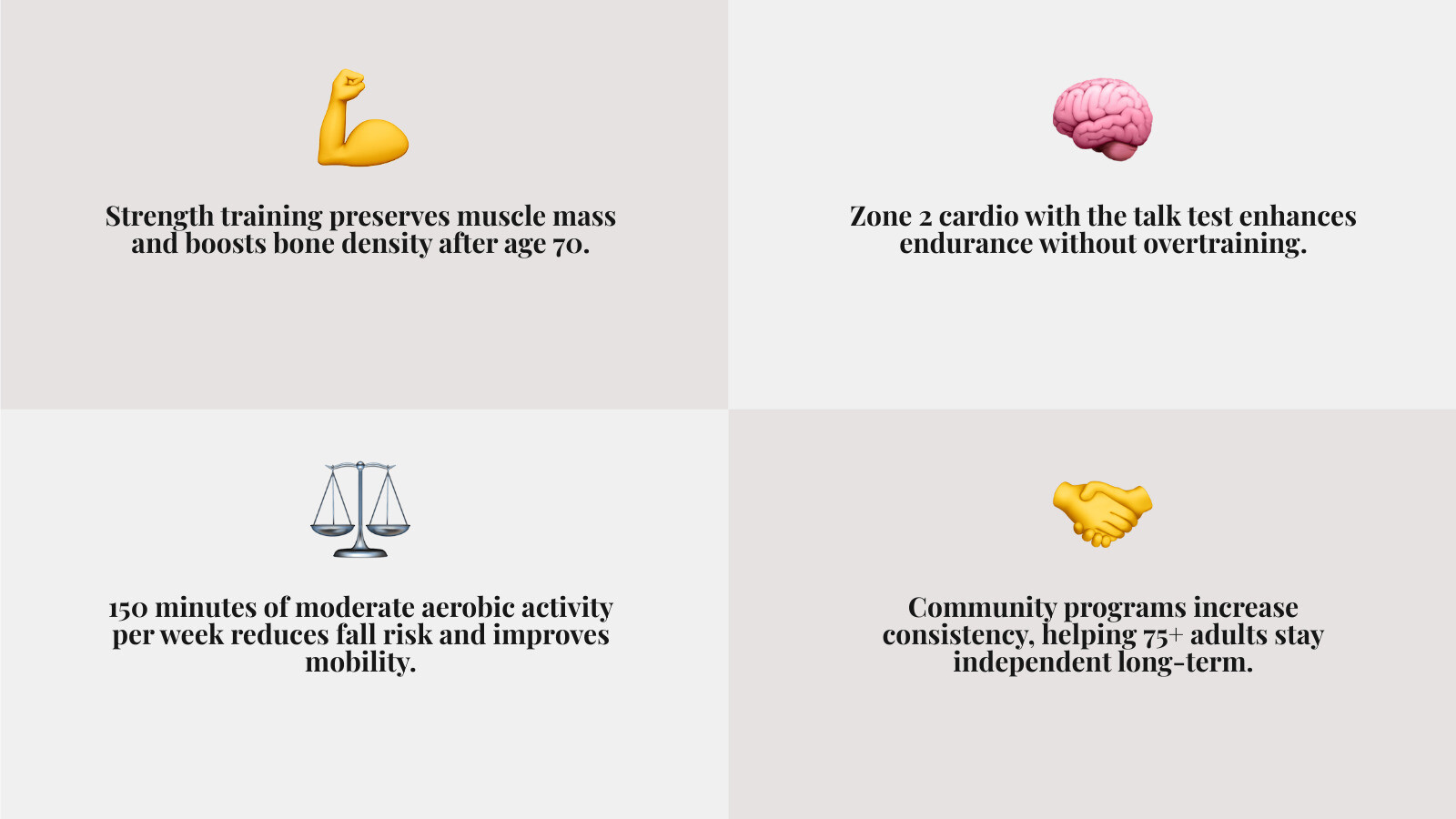
- Aim for 150 minutes per week — spread across most days in manageable chunks
- Add strength work twice a week — to protect muscle mass and bone density
- Make it social — group classes or a walking buddy dramatically improve consistency
- Listen to your body — if you can hold a conversation, your intensity is likely right
- Get medical clearance first — especially if you have a chronic condition or haven’t exercised in years
Think about exercise for a moment. Most people know it’s important. But for older adults — or the family members helping them stay healthy — starting feels hard, and sticking with it feels even harder.
Here’s the reality: exercise is one of the most powerful tools available for healthy aging. Research shows that adults who maintain moderate physical activity can significantly lower their risk of disease, falls, cognitive decline, and loss of independence.
But the keyword is sustainable. Not intense. Not perfect. Just consistent.
The problem is that many fitness programs aren’t designed for real life after 50 or 60 or 70. They’re too hard, too boring, or too easy to abandon when motivation dips. What actually works — long-term — is building a routine around movement you enjoy, at an intensity your body can tolerate, inside a structure that gives you support.
That’s exactly what this guide is about.
Quick sustainable fitness for seniors terms:
Why Sustainable Fitness for Seniors Matters More Than Exercising Hard
As we approach May 2026, the data is clearer than ever: for older adults, the goal of exercise isn’t to win a race or look like a bodybuilder. It’s about “functional longevity”—the ability to do what you love without pain or restriction. We often see people try to jump into intense programs only to burn out or get injured. Sustainable fitness for seniors is about finding the “sweet spot” where movement feels like medicine, not a chore.
The stakes are high. Muscle mass begins to drop by about 1% every year after middle age. Without intervention, some adults can lose up to 50% of their muscle by age 80. This loss, known as sarcopenia, is a major contributor to frailty. However, the good news is that this is largely preventable. A 2022 study showed that maintaining 300 to 600 minutes of moderate activity weekly was associated with significantly lower mortality rates. Even 150 minutes—the standard recommendation—provides a massive boost to your heart, brain, and bones.
The physical benefits of sustainable fitness for seniors
When we focus on sustainability, we give our bodies time to adapt. The physical rewards are extensive:
- Bone Health: Weight-bearing exercise helps maintain bone density, which is critical in preventing fractures.
- Fall Prevention: Fall risk is the leading cause of injury-related death in adults over 65. Exercises like Tai Chi can reduce this risk by an incredible 47%.
- Heart and Metabolic Health: Walking 8,000 to 10,000 steps daily helps lower the risk of age-related illnesses like Type 2 diabetes and heart disease.
- Daily Function: Being able to carry groceries, get up from a chair, and play with grandkids requires a baseline of strength and flexibility that only regular movement provides.
The mental and social benefits that keep seniors consistent
The benefits aren’t just from the neck down. Regular exercise improves cognition, memory, and mood. It’s a powerful tool against depression and anxiety, providing a sense of purpose and accomplishment.
Perhaps most importantly, making exercise social is the “secret sauce” for consistency. Whether it’s a walking group in Mount Airy or a strength class in Frederick, the social connection creates a sense of belonging. When someone expects you to show up, you’re far more likely to stick with it.
How Much Exercise Seniors Need Each Week for Safe, Lasting Results
Finding the right “dose” of exercise is key to sustainable fitness for seniors. We don’t want you to do so much that you’re exhausted for three days, but we want enough to trigger positive changes in your body.
A simple weekly formula for sustainable fitness for seniors
According to general health guidelines, here is the roadmap for a balanced week:
| Exercise Type | Frequency | Goal |
|---|---|---|
| Aerobic (Cardio) | 150–300 mins/week | Heart health & endurance |
| Strength Training | 2 days/week | Muscle & bone density |
| Balance Work | 3 days/week | Fall prevention |
| Flexibility/Mobility | Daily | Joint health & range of motion |
For most of our neighbors in Maryland, this might look like a 30-minute walk five days a week, two sessions of light resistance band work, and a few minutes of daily stretching or Tai Chi.
How to use heart rate zones and RPE without overtraining
To keep things safe, we use two main tools: Heart Rate (HR) Zones and the Rate of Perceived Exertion (RPE).
For those over 50, we prioritize Zone 2 training (60-70% of your Max HR). This is the intensity where you’re moving but can still speak in full sentences. It promotes heart health and burns fat without overstressing your joints. To estimate your Max HR, subtract your age from 220. If you are 70, your Max HR is 150, and your Zone 2 target would be roughly 90–105 beats per minute.
We also follow the 80/20 rule: 80% of your workouts should be low-to-moderate intensity (Zones 1-2), while only 20% should be higher effort. A great indicator of a “sustainable” workout is that any fatigue you feel should resolve within 60 minutes of finishing.
The Best Low-Impact Exercises for Sustainable Senior Fitness
Choosing the right activity is half the battle. You want something that challenges your muscles without “beating up” your joints.
Walking, water exercise, and cycling for joint-friendly cardio
- Walking: The most accessible exercise. It’s free, social, and can be done anywhere from Carroll County parks to local malls.
- Water Aerobics: The buoyancy of water takes the pressure off your knees and hips, making it ideal for those with limited mobility.
- Recumbent Cycling: This provides a great cardio workout while supporting your back and reducing the risk of falling off a bike.
Strength, balance, and mobility moves that protect independence
Strength is the foundation of balance. We focus on “functional” moves that mimic real life:
- Sit-to-Stands: This is essentially a squat using a chair. It builds the leg strength needed to stay independent.
- Resistance Band Rows: These strengthen the back and improve posture.
- Tai Chi and Yoga: These are world-class for balance and flexibility.
For more structured help, check out our Step-by-Step Guide to Strength Training Program or learn why balance is a strength game.
How to adapt exercise for arthritis, back pain, and knee issues
Pain shouldn’t stop you, but it should change how you move. If you have a flare-up, reduce the range of motion or switch to a non-weight-bearing activity like swimming. Using a chair for support during yoga or balance moves is not “cheating”—it’s smart training.
We have extensive resources on managing these conditions:
- Understanding Arthritis: Causes, Types, and Management
- Understanding and Managing Low Back Pain
- Motion Matters: A Guide to Optimal Knee Health

How to Build a Routine You Can Actually Keep After 50
The hardest part of sustainable fitness for seniors isn’t the workout—it’s the habit. We recommend building “identity-based” habits. Instead of saying “I need to exercise,” say “I am a person who walks every morning.”
Set short- and long-term goals for sustainable fitness for seniors
Use SMART goals (Specific, Measurable, Achievable, Relevant, Time-bound).
- Short-term: “I will attend two strength classes this week.”
- Long-term: “I want to be able to hike the local trails in Frederick by autumn.” Track your “functional wins,” like being able to carry the laundry upstairs without getting winded. These mean more than any number on a scale.
Make exercise social so it becomes easier to sustain
Humans are social creatures. Joining a local group can change everything. In our area, we have wonderful resources like the Howard County 50+ fitness options and the Carroll County senior center programs. These centers offer a place to meet people who share your goals, making the journey much more enjoyable.
Use simple tools and programs to track progress and stay motivated
You don’t need fancy tech, but a little data helps.
- Step Counters: A simple pedometer or a smartphone app can keep you moving.
- RPE Journal: Write down how you felt on a scale of 1-10 after each workout.
- SilverSneakers: Many Medicare plans offer this program, providing access to gyms and specialized classes.
Common Mistakes Seniors Should Avoid to Stay Active for Life
Safety is the cornerstone of sustainability. One injury can set you back months, so we prioritize “progression neutrality”—staying consistent is better than constantly trying to add more weight or speed.
High-risk exercises and habits that can raise injury risk
Avoid “ballistic” or jerky movements. Seniors should generally skip:
- High-impact jumping (unless specifically cleared).
- Deep behind-the-neck presses (which can strain the shoulders).
- Heavy twisting under load (which can hurt the back).
- Exercising on slippery or uneven surfaces without proper footwear.
Check out our guide on workout mistakes after 30 for more tips on what to avoid as you age.
The safety basics: warm-ups, hydration, clothing, and listening to your body
Always start with a 5-10 minute dynamic warm-up (like arm circles and leg swings) to get blood flowing. Hydration is critical because the thirst mechanism weakens as we age. Wear breathable layers and sturdy, closed-toe shoes with good grip.
Most importantly: Listen to your body. If you feel sharp pain, dizziness, or chest pressure, stop immediately. Exercise should feel like a “3 or 4” out of 10 on the effort scale, not a 9.
When to talk to your doctor before starting a new plan
If you have a history of heart disease, diabetes, or severe osteoporosis, or if you’ve recently had surgery, a doctor’s visit is mandatory. They can help you understand your limits and how your medications might affect your heart rate or balance.
The Long-Term Secret: Programs, Community, and Coaching That Make Fitness Stick
Research into programs like “Active for Life” shows that the most successful seniors are those who integrate fitness into their existing community. When a program is part of your local infrastructure—like your church, senior center, or a local coaching facility like Primedy Health in Mount Airy—it becomes a permanent part of your life.
Why community and organizational support improve long-term success
Programs stay sustainable when they have “champions”—leaders who encourage participation and keep the energy high. At Primedy Health, we act as those champions, providing the objective tracking and professional coaching that takes the guesswork out of getting strong.
Real-life examples of seniors over 70 staying strong and independent
We see it every day: 75-year-olds who started with chair yoga and are now lifting light weights and walking miles. One local resident in Carroll County began a walking program after a fall scare; two years later, she hasn’t had another fall and credits her “strength game” for her confidence. These stories aren’t miracles—they are the result of sustainable fitness for seniors.
Your next step toward sustainable senior fitness
If you’re ready to move better and feel stronger, you don’t have to do it alone. Whether you need a health reset or a long-term plan, we are here to help.
We provide coach-led strength training and health coaching both in-person in Mount Airy and online. Our focus is on real lives and sustainable results.
Frequently Asked Questions About Sustainable Fitness for Seniors
What is the safest exercise for most seniors starting out?
Walking is generally the safest and most effective starting point. If balance is a concern, water aerobics or chair-based exercises (like chair yoga) provide a safe environment to build a base of fitness without the risk of falling.
Is strength training safe after 70?
Yes! In fact, it is essential. Strength training is the only way to effectively counter age-related muscle loss. The key is supervised progression and focusing on form. Check out our resources on knees and shoulders to learn how to protect your joints while lifting.
How do seniors know if exercise intensity is right?
Use the “Talk Test.” If you can talk but not sing, you are likely in Zone 2, which is perfect for sustainability. On a scale of 1-10 (RPE), you should aim for a 3 or 4. If you feel “wiped out” for the rest of the day, the intensity was too high.