

Why a Strength Training Program Is the Foundation of Lasting Fitness
A strength training program is one of the most effective tools available for building muscle, burning fat, improving bone density, and staying healthy as you age. Whether you’re just starting out or coming back after a long break, the right program makes all the difference.
Here’s what you need to know at a glance:
- Frequency: Train at least 2-3 days per week, targeting all major muscle groups
- Structure: Use compound movements like squats, deadlifts, bench press, and overhead press as your foundation
- Progression: Add small amounts of weight each session — this is called progressive overload
- Duration: Sessions of 20-75 minutes are enough to see real results
- Timeline: Expect noticeable strength gains within the first 4-8 weeks, significant changes by month 3-6
Most people who struggle with fitness don’t have a motivation problem. They have a structure problem. Without a clear program, workouts become random, progress stalls, and burnout follows.
The good news? You don’t need hours in the gym or a complicated plan. Research consistently shows that two to three sessions of 20-30 minutes per week can produce significant strength improvements — especially in the early months when your body responds fastest to new training stimulus.
This guide walks you through everything: the core principles, the best beginner programs, how to progress, and how to customize training for your goals, schedule, and age.
Core Principles of an Effective Strength Training Program
To build a body that is as strong as it looks, you need more than just “exercise.” You need a system. At Primedy Health, we focus on the fundamental laws of biology that dictate how muscles grow and how strength is gained. In April 2026, these principles remain the gold standard because they are backed by decades of sports science.
Progressive Overload
This is the “Golden Rule” of lifting. If you lift the same 10-pound dumbbell for the next three years, your body has no reason to change. To keep making gains, you must gradually increase the stress placed upon the body. This usually means adding weight to the bar, but it can also mean doing more repetitions or shortening your rest periods.
Compound Movements
We prioritize multi-joint exercises because they recruit the most muscle mass and trigger the greatest hormonal response. Think of these as the “big rocks” of your strength training program. If you focus on these, Your Muscles Called and They Want These Customized Strength Training Plans will yield results much faster than a routine filled with bicep curls and calf raises.
Specificity and Frequency
Your body adapts to the specific demands you place on it. If you want to get stronger, you have to lift heavy things. For most healthy adults, the Department of Health and Human Services recommends strength training for all major muscle groups at least twice a week. You can review the current federal guidance in the Physical Activity Guidelines for Americans. However, many find that three sessions per week is the “sweet spot” for balancing work and recovery.
| Feature | Compound Exercises | Isolation Exercises |
|---|---|---|
| Joints Involved | Multiple (e.g., Squat) | Single (e.g., Leg Extension) |
| Muscle Groups | Many at once | One specific muscle |
| Weight Lifted | Heavy | Light to moderate |
| Efficiency | High (more bang for your buck) | Lower (takes more time) |

Avoiding Common Workout Mistakes
Even the best intentions can be sidelined by simple errors. We often see Workout Mistakes After 30 that lead to injury or plateaus.
- Ego Lifting: Trying to lift weight that is too heavy for your current form. This is the fastest way to visit a physical therapist.
- Ignoring Form: If you aren’t moving through a full range of motion, you aren’t getting the full benefit.
- Overtraining: More is not always better. Muscles grow while you rest, not while you’re in the gym. If you’re constantly sore and tired, you might need more recovery time.
Getting Started: Beginner strength training program Options
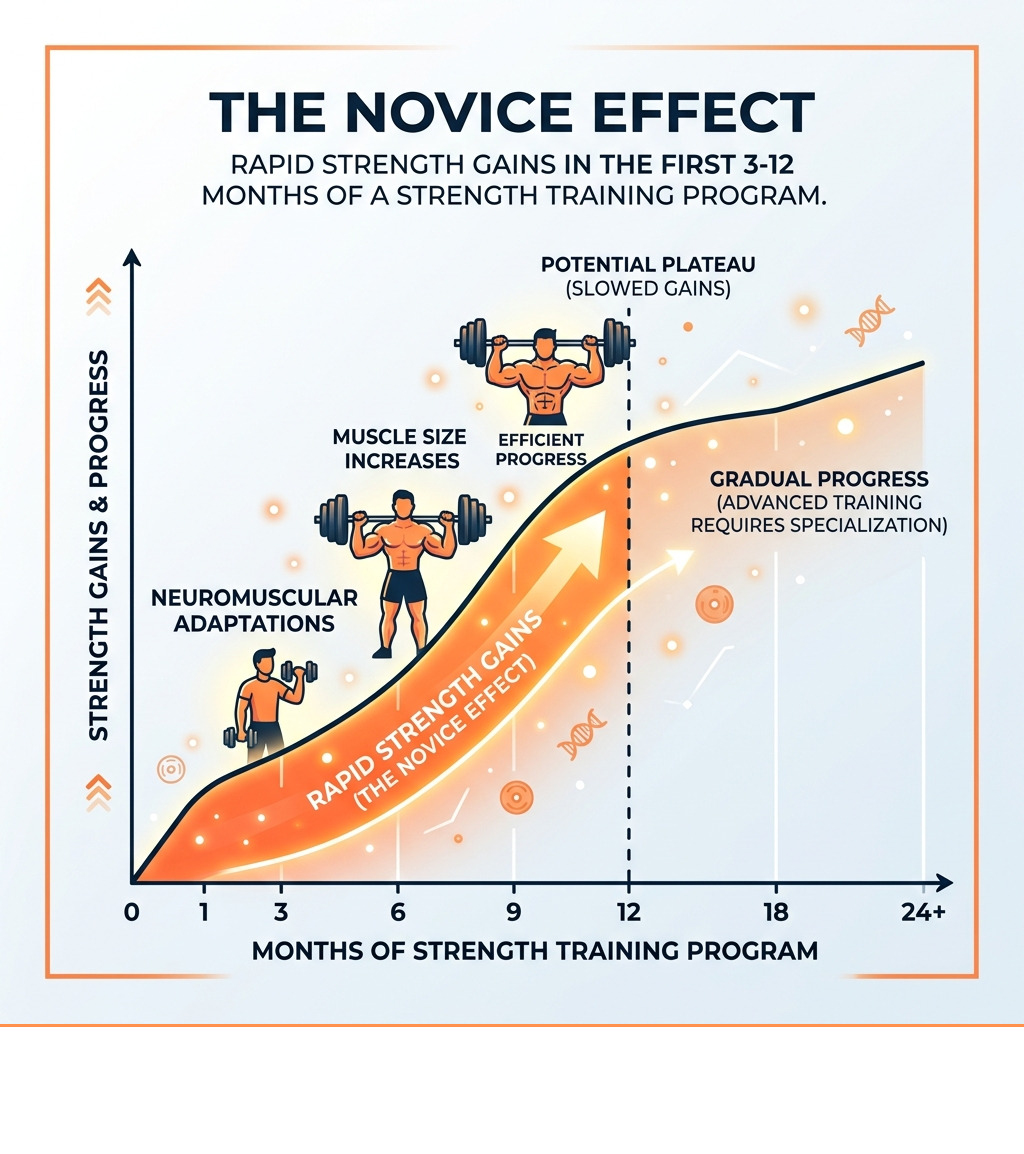
If you are a novice, you are in a “superhuman” phase. Because your nervous system is not yet efficient at recruiting muscle, you can make rapid jumps in strength. Most healthy men between 18-35 can add 10 lbs to their squat the first few times they train, and 15-20 lbs to their deadlift!
Linear Progression
For beginners, we recommend a linear progression model. This simply means you add a small, fixed amount of weight every single workout. Programs like “Starting Strength” or “StrongLifts 5×5” are famous for this. They typically involve three full-body workouts a week, alternating between two different sessions (Workout A and Workout B).
The 5×5 Method
This is a classic approach where you perform 5 sets of 5 repetitions for your main lifts. It provides enough volume to build muscle (hypertrophy) while being heavy enough to build serious neurological strength. If you’re nervous about starting alone, Everything You Need to Know About In-Person Fitness Coaching can help you master these movements safely.

The Best Beginner strength training program Exercises
You don’t need 50 different machines. You need these five movements:
- Squat: The king of all exercises. It builds the Glutes, quads, and core.
- Deadlift: Essential for a strong back and posterior chain.
- Bench Press: The primary builder for the chest and triceps.
- Overhead Press: Critical for developing stable, powerful Shoulders.
- Barbell Row: Balances out your pressing movements by strengthening the upper back.
Equipment Essentials for Home and Gym
You don’t need a fancy “bio-hacking” lab to get started. If you’re training in Mount Airy, MD, or Frederick, most local gyms will have the basics. If you’re building a home gym, prioritize:
- A Power Rack: For safety during squats and presses.
- An Olympic Barbell and Plates: The most versatile tool in existence.
- Dumbbells or Kettlebells: Great for accessory work and “goblet” variations.
- Resistance Bands: Perfect for warm-ups and mobility.
Progression, Recovery, and Customization for Long-Term Gains
After the initial “honeymoon phase” of the first 3-6 months, your progress will naturally slow down. This is where the “art” of programming comes in.
The Role of RPE and Tracking
As you get stronger, you can’t just add 5 lbs every time forever. We teach our clients to use the RPE Scale (Rate of Perceived Exertion). On a scale of 1 to 10, how hard was that set? This allows you to “auto-regulate” your training. If you didn’t sleep well or are stressed at work, an RPE 8 might be a lighter weight than usual, and that’s okay. Learning How to Track Your Workout Results Without Losing Your Mind is vital for long-term sanity and success. We offer Progress Tracking tools to help our members stay on the right path.
Recovery: The Secret Ingredient
You don’t get strong in the gym; you get strong recovering from the gym.
- Sleep: Aim for 7-9 hours. This is when muscle protein synthesis is at its peak.
- Nutrition: You need enough protein to repair tissue and enough calories to fuel the work.
- Deload Weeks: Every 4-8 weeks, reduce your training volume by 50%. This allows your joints and nervous system to “catch up” to your muscles.
Customizing Your strength training program for Aging and Longevity
Strength training isn’t just for athletes; it’s a medical necessity for older adults. After age 30, we naturally lose muscle mass (sarcopenia) and bone density.
- Joint Health: Strength training strengthens the ligaments and tendons around your Knees and hips, reducing the risk of falls and chronic pain.
- Metabolic Health: Muscle is metabolically expensive tissue. The more you have, the better your body manages blood sugar and weight.
Transitioning from Novice to Intermediate Training
Once you can no longer add weight every session, you’ve become an intermediate. This usually requires more variety and “periodization” (cycling through phases of high volume and high intensity). If your schedule is too busy for in-person sessions in Mount Airy, our Customized Virtual Programming provides the structure you need to keep moving forward.
Frequently Asked Questions about Strength Training
How often should I train for maximum results?
For most people, three days a week on non-consecutive days (like Monday, Wednesday, Friday) is perfect. This allows for a 48-hour recovery window between sessions, which is generally how long it takes for muscle protein synthesis to return to baseline. If you are very busy, even two 30-minute sessions can maintain your health and provide 80% of the benefits.
What are realistic expectations for the first year?
In your first 3-12 months, the changes are often dramatic. Many men can double their starting squat weight, and women often see incredible shifts in body composition and confidence. You can read a Women’s Strength Story to see how transformative this journey can be. Initially, your gains are “neural”—your brain is just learning how to use your muscles. Real muscle growth (hypertrophy) starts becoming visible around the 3-month mark.
Can I lose fat while following a strength program?
Absolutely. This is called body recomposition. While a caloric deficit is necessary for fat loss, a strength training program ensures that the weight you lose comes from fat, not muscle. Furthermore, the “afterburn effect” (EPOC) means your metabolism stays elevated for hours after a heavy lifting session.
Conclusion
Starting a strength training program is the best gift you can give your future self. It’s about more than just looking good in April 2026; it’s about maintaining your independence, protecting your joints, and building a body that can handle whatever life throws at it.
At Primedy Health, we specialize in making this process simple and sustainable. We don’t believe in “flash-in-the-pan” fitness trends. We believe in objective progress tracking and coach-led support that fits into your real life. Whether you want to join us for Personal Training, Group Training, or use our Pre-designed Programs, we are here to help you in Mount Airy and throughout Maryland.
Ready to see what your body is actually capable of?