

Progress should be measurable — not a guessing game.
For our in-person members, we track a few indicators that keep training aligned: strength trends, movement quality, and body composition direction — reviewed with a coach so you always know what to do next.
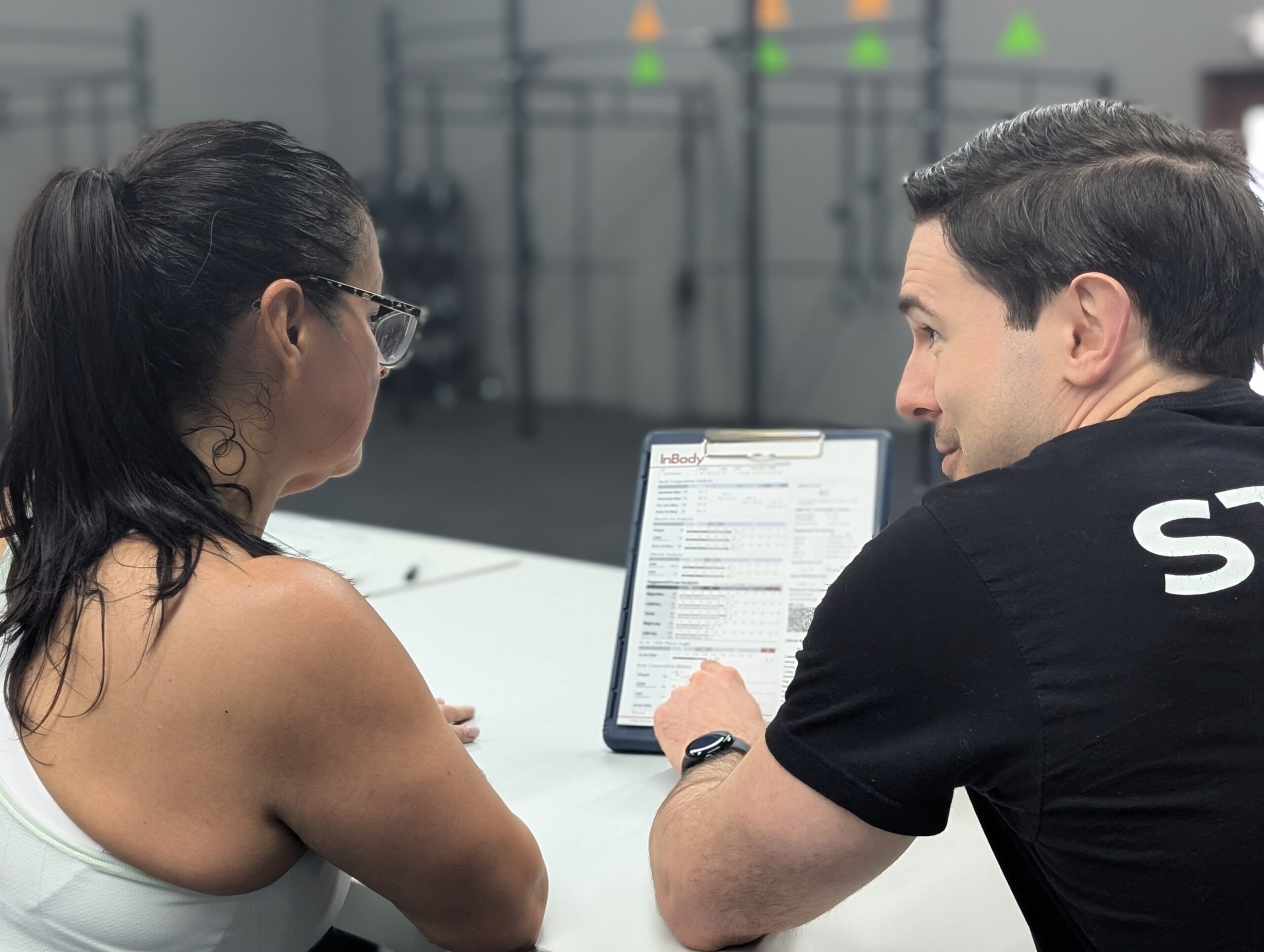
Three categories that tell the truth.
We don’t obsess over one number. We look at a small set of indicators that actually guide the plan.
1 Strength & Capacity
Training progress over weeks and months — scaled to your current level.
2 Movement Quality
How you move matters. Better patterns support better training (and fewer nagging issues).
3 Body Composition Trends
When relevant, we track direction over time — not one-off readings.
Used when helpful — never just to collect data.
Body Composition (InBody)
Useful when body composition is part of your goal. We focus on trends and context.
- Trend & direction over time
- Interpreted with sleep, stress, and training in mind
- Used to guide decisions — not shame
Movement & Performance Baseline
When appropriate, we check key patterns and simple benchmarks to set the right starting point.
- Foundational patterns relevant to your training
- Benchmarks scaled to the individual
- Clear next steps: what to prioritize, and why
Consistent reviews — calm process.
Training Progress
- Tracked through coaching notes and programming
- Progressions adjusted based on performance and recovery
- Focus: strength, confidence, repeatability
Composition Trends
- Reviewed on a consistent schedule (not daily)
- Trend & direction matter most
- Focus: is the plan working in real life?
Data → plan → action.
We keep this simple: interpret your starting point, set priorities, then coach execution.
Interpret your baseline
We review results with context so the plan fits your life.
Set priorities
Training focus + a few supporting habits. Clear and doable.
Coach the next phase
We adjust as you progress so you don’t stall or get hurt.